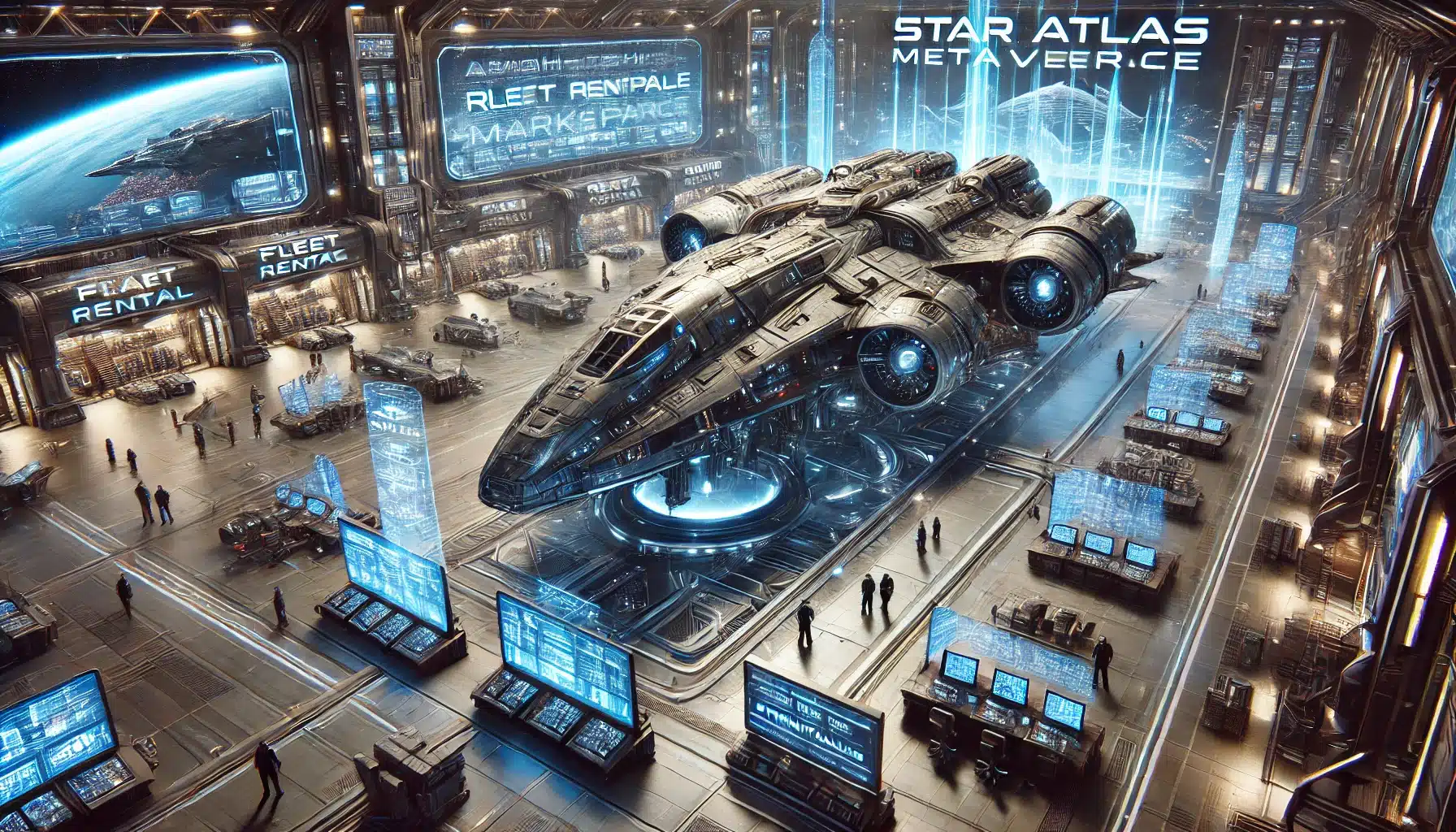
The metaverse of Star Atlas is taking a monumental step toward economic sustainability with the introduction of Fleet Rentals. This long-awaited feature is not just a tool for leasing ships—it represents the first step toward a truly circular Web3 economy. By allowing passive investors to generate income and active players to access high-tier fleets without major upfront costs, Star Atlas is laying the groundwork for what could become the first self-sustaining gaming economy in Web3 history.
The Role of Fleet Rentals in a Web3 Gaming Economy
Until now, Web3 games have struggled to establish sustainable in-game economies. Most blockchain games operate on models that reward early adopters but fail to retain long-term player engagement. Star Atlas, however, is taking a different approach. Instead of relying solely on speculation and NFT trading, it is building an interconnected player-driven economy where assets serve a functional purpose within the game world.
Fleet Rentals are a key component of this vision. They introduce a new way for non-gaming participants to enter the economy, ensuring that every asset—whether owned or rented—is continuously utilized to generate value. This eliminates idle capital and prevents resources from being locked up by inactive players, making the economy more fluid and dynamic.
A Step Toward a True Circular Economy
The success of a virtual economy depends on continuous value exchange between different player roles. Star Atlas is shaping this structure by ensuring that every player, whether an investor, trader, or combat pilot, has a financial incentive to participate. The introduction of Fleet Rentals is only the first phase.
In the future, this model will expand to combat systems, trade routes, and territorial control. This will create a complex web of economic cycles, where every in-game action influences the financial landscape. Fleet owners will earn passive income from rentals, while active players will use these assets to generate in-game profits, ensuring constant value circulation.
If this model succeeds, Star Atlas could become the first true Web3 game with a fully functional, player-driven economy. The challenge will be balancing incentives, ensuring asset utility, and preventing inflationary pressures that have plagued previous blockchain-based games.
The Challenge of Attracting Players and Expanding the Ecosystem
The biggest challenge for Star Atlas will be player engagement. A circular economy can only function if a large number of participants actively engage with the ecosystem. Expanding the game’s appeal beyond crypto-native users will be crucial in achieving long-term sustainability.
Attracting traditional gamers remains one of the biggest hurdles for Web3 gaming. Most blockchain-based games suffer from high entry barriers, complex onboarding processes, and a lack of engaging gameplay mechanics. To overcome this, Star Atlas must focus on player experience, ensuring that the game is compelling beyond its economic mechanics.
Another possible direction could be artificial intelligence and AI-driven agents. AI could automate certain game functions, helping optimize resource production, trade, and fleet management. However, AI alone cannot replace the human element that makes games truly engaging. The key to long-term success will be fostering an active, thriving community, where player interaction—both in-game and in external platforms—drives economic expansion.
A Glimpse Into the Future of Web3 Gaming
The Fleet Rental system is a significant milestone, but it is only the beginning. The real test will come when combat mechanics, trade routes, and faction-based warfare integrate into the rental model. When this happens, Star Atlas will not only have economic cycles within the game but also player-driven macroeconomic dynamics that dictate resource control, strategic investments, and in-game governance.
We are witnessing the early stages of the first true Web3 economic experiment. If Star Atlas can successfully create a self-sustaining in-game economy, it will set a precedent for the entire industry. The road ahead is long, but the foundation is now in place.
Will Star Atlas Be the First Truly Sustainable Web3 Game?
For years, the idea of a blockchain game with a fully functional economy has been more theory than reality. Star Atlas is now attempting to change that, offering a vision where gameplay, player incentives, and asset ownership come together in a self-sustaining ecosystem.
The success of this model depends on expanding player engagement, balancing economic incentives, and ensuring long-term scalability. If Star Atlas can achieve these goals, it could become the first Web3 game to prove that blockchain gaming is more than just speculation. The future of metaverse economies might just start here.
Start Free Today. Unlock Your 15% Member Discount.
Access the Free Start program immediately and receive an exclusive 15% discount for your first Learning Path purchase.
Build your foundation before making your next investment decision.