Institutional confidence in Solana is hitting new highs, with four publicly listed companies now collectively holding over $590 million worth of SOL. This trend underscores the growing recognition of Solana as not just a blockchain for developers and DeFi enthusiasts, but as a serious long-term investment asset for corporate treasuries.
Over the past year, the pace of accumulation has accelerated, signaling that large-scale investors are not only betting on Solana’s technological edge but also on its ability to compete head-to-head with Ethereum in the smart contract and decentralized application markets.
The Four Public Firms Leading Solana’s Institutional Wave
A recent analysis from CoinGecko reveals that Upexi, Inc., DeFi Developments Corp (DeFi Dev.), SOL Strategies, and Torrent Capital are now among the largest publicly disclosed holders of Solana tokens. Together, these four companies control more than 3.5 million SOL, representing approximately 0.65% of the circulating supply and 0.58% of the total supply.
What’s more striking is not just the sheer size of these positions, but the speed and conviction with which they were built.
Upexi, Inc. – The Aggressive Front-Runner
At the top of the list sits Upexi, Inc., which has rapidly established itself as the largest institutional holder of Solana among publicly traded firms. In just four months, Upexi accumulated 1.9 million SOL, paying an average price of $168.63 per token for a total investment of roughly $320.4 million.
This aggressive buying spree began in late April 2025 and has shown no signs of slowing. Upexi’s position is a clear signal that it views Solana as a cornerstone of its digital asset strategy, potentially anticipating significant appreciation in the years ahead.
DeFi Developments Corp – The Most Profitable Holder
While Upexi holds the largest stake, DeFi Dev. has managed to secure the most profitable position so far. With 1,182,685 SOL acquired at an average cost of $137.07, its holdings are now worth about $198.9 million—representing $36.8 million in unrealized gains.
The company has been consistently increasing its exposure, most recently adding 181,303 SOL on July 29 for $28.2 million at an average of $155.33 per token. The absence of any reduction in holdings indicates a strong conviction that Solana’s upside potential is far from exhausted.
SOL Strategies – The Methodical Accumulator
Toronto-based SOL Strategies has taken a different approach. Over the course of more than a year, from June 2024 to July 2025, the firm accumulated 392,667 SOL using a steady dollar-cost averaging strategy.
Purchasing at an average of $166.86 per token, and supplementing the position with staking rewards, SOL Strategies now holds a stake worth $66 million, with about $3.9 million in unrealized gains. The company’s long-term and systematic approach suggests a belief in both price appreciation and the benefits of Solana’s staking yields.
Torrent Capital – The Early Opportunist
Rounding out the list is Torrent Capital, which purchased 40,039 SOL in early 2025 across five transactions, paying an average of $161.84. Although it holds the smallest amount, Torrent’s early entry ahead of Solana’s recent surge has resulted in $200,000 in gains, bringing its total valuation to over $6.7 million.
Market Context – SOL Nears a Critical Resistance
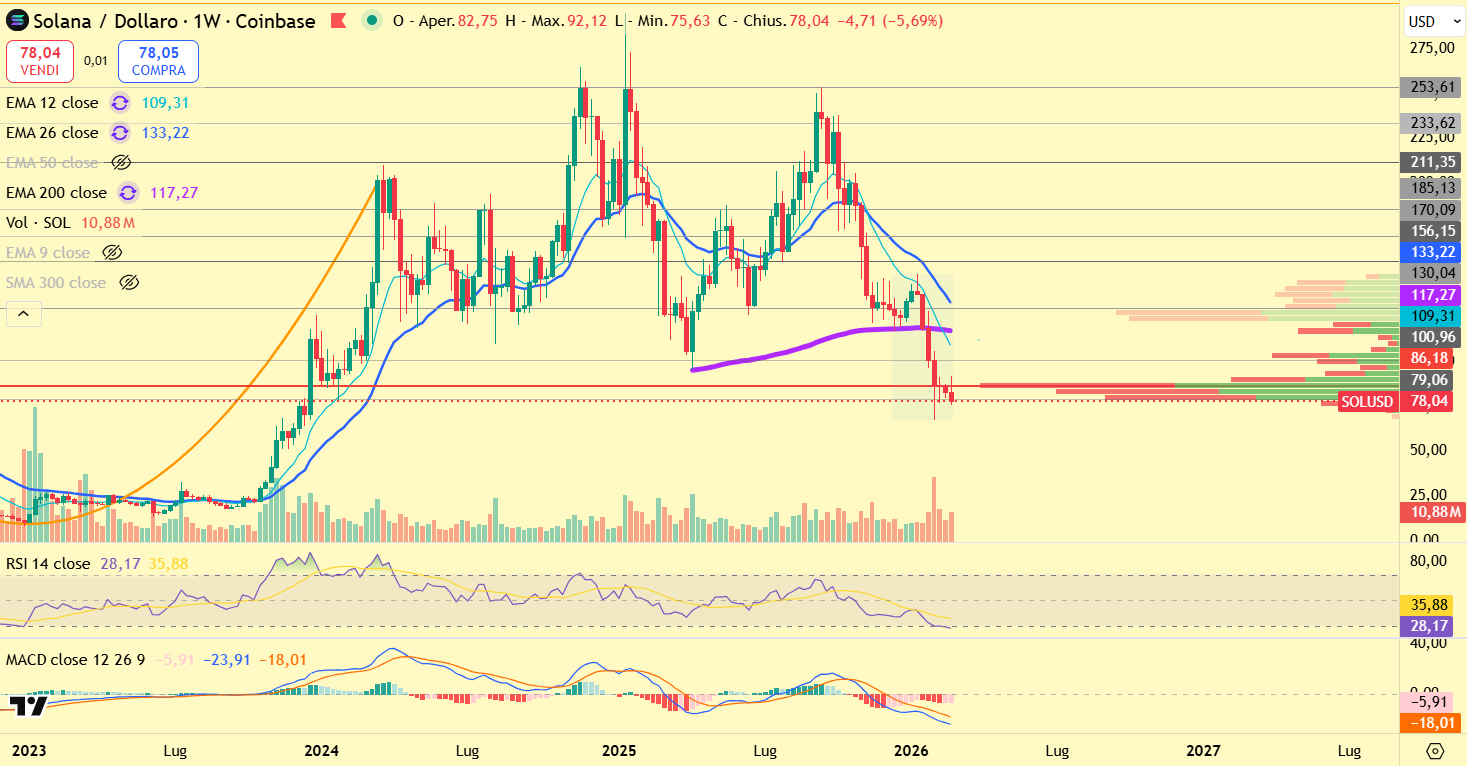
Beyond these institutional holdings, the Solana market itself has been gaining momentum. Over the last month, SOL has risen 14%, trading above $180 as of press time. This upward move comes amid a broader crypto market rally, with several major altcoins posting double-digit gains.
Technical analysts point out that SOL is now approaching a key resistance level. Breaking above this zone could open the door to a more extended bullish run, while a rejection may lead to short-term consolidation.
Market sentiment remains optimistic, bolstered by growing institutional participation and the belief that Solana’s network performance, scalability, and developer ecosystem provide a strong foundation for further growth.
Why Institutional Interest Matters for Solana
The entry of publicly traded companies into Solana is not just a bullish signal—it’s a game changer. Institutional holdings provide:
Price Stability – Large, long-term investors tend to reduce market volatility. Credibility – Corporate adoption enhances Solana’s legitimacy in the eyes of traditional finance. Liquidity Depth – Bigger positions create deeper markets, attracting even more capital.
These factors contribute to a reinforcing cycle: institutional investment drives confidence, which in turn fuels retail participation and further institutional interest.
Looking Ahead – Can Solana Maintain the Momentum?
The challenge for Solana will be sustaining its network growth and user adoption while maintaining competitive transaction fees and high-speed performance. The ecosystem’s expansion into DeFi, NFTs, and gaming continues to attract developers, and partnerships with institutional investors could drive even more use cases.
If the $180 resistance level breaks decisively, analysts believe SOL could test the $200–$220 range in the short term. However, macroeconomic factors, overall crypto market sentiment, and the trajectory of Bitcoin will play key roles in determining the pace of this move.
Conclusion
Institutional accumulation of over $590 million in Solana highlights a growing shift in the way public companies are allocating capital to digital assets. The strategies of Upexi, DeFi Dev., SOL Strategies, and Torrent Capital show varying levels of aggression, profitability, and patience—but all share a common conviction: Solana is a blockchain worth betting on.
As the network continues to innovate and the market flirts with critical resistance, Solana’s future trajectory may well be shaped by the same institutions that are now solidifying their positions. Whether the next move is a breakout or a retracement, one thing is clear—institutional Solana holdings are here to stay.