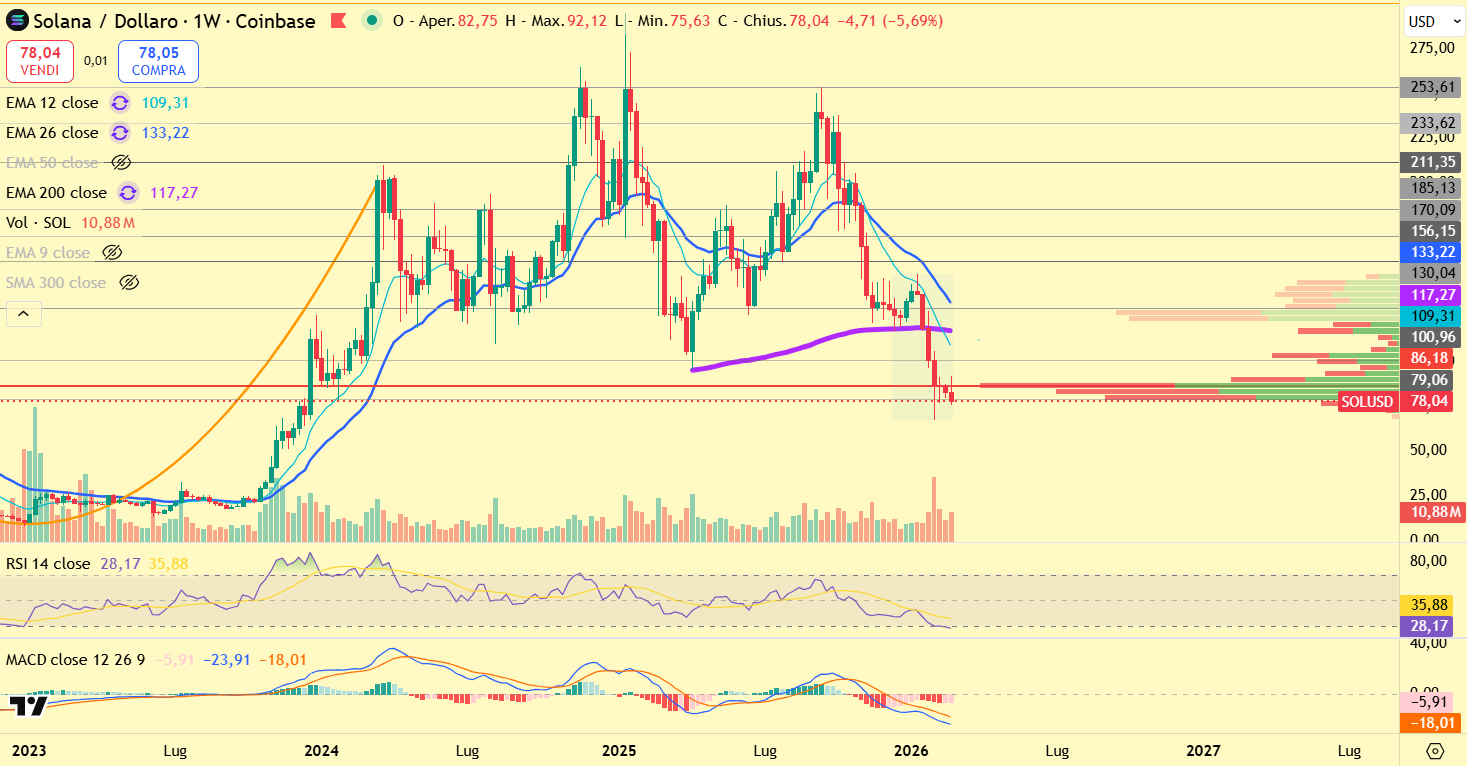
The Solana ETF inflows narrative has quietly become one of the most relevant institutional signals in the current crypto market cycle. While price action across Solana has remained under pressure and broader altcoin sentiment continues to fluctuate, capital flows into regulated Solana investment products tell a very different story. Instead of retreating, institutional exposure to Solana has continued to expand in a measured but persistent way.
This divergence between price performance and capital allocation is not accidental. It reflects a structural shift in how professional investors approach Solana as an asset, focusing less on short term volatility and more on long term positioning within the digital asset landscape.
Understanding the Current Solana ETF Inflows Trend
Solana ETF inflows have now extended into a multi session streak, pushing cumulative inflows toward a significant milestone. While daily allocations have moderated compared to the initial launch phase, the consistency of positive flows is arguably more important than headline numbers.
According to aggregated ETF flow data from Farside Investors https://farside.co.uk, Solana ETFs have recorded uninterrupted net inflows for seven consecutive trading sessions. This pattern signals sustained demand rather than speculative bursts, a key distinction when evaluating institutional behavior.
In previous crypto cycles, inflow spikes were often followed by equally aggressive reversals. The current Solana ETF inflows structure appears more deliberate, suggesting strategic allocation rather than momentum chasing.
Why Slower Inflows Can Be a Bullish Signal
At first glance, the deceleration in daily inflows may appear concerning. However, from a market structure perspective, slower but persistent inflows often represent a healthier accumulation phase.
Institutional investors typically scale into positions over time to minimize market impact and manage risk exposure. This behavior contrasts sharply with retail driven inflows, which tend to surge during euphoric phases and evaporate quickly during drawdowns.
The current Solana ETF inflows profile aligns with this institutional pattern. Capital is entering the ecosystem steadily, even as Solana price remains below key resistance levels. This implies confidence in the asset’s medium to long term value proposition rather than reliance on short term price appreciation.
Solana ETFs and the $700 Million Threshold
Cumulative Solana ETF inflows are now approaching the seven hundred million dollar mark. Reaching this level within months of launch places Solana ETFs among the fastest growing digital asset investment products outside of Bitcoin and Ethereum.
This milestone is particularly noteworthy given the broader market environment. Crypto markets have experienced elevated volatility, tightening liquidity conditions, and cautious risk sentiment. Yet despite these headwinds, Solana ETF inflows have continued to expand.
From a comparative standpoint, early Bitcoin ETF adoption followed a similar trajectory, where initial explosive inflows gave way to steady accumulation phases. Historically, these quieter periods often preceded renewed institutional engagement during subsequent market expansions.
Institutional Strategy Versus Spot Price Action
One of the most misunderstood aspects of Solana ETF inflows is their relationship with spot price performance. While Solana price has trended lower in recent weeks, ETF inflows have remained positive.
This divergence highlights a critical point. Institutional investors do not necessarily require immediate price confirmation to allocate capital. Instead, they often position during periods of weakness, anticipating future structural developments.
Solana’s ecosystem continues to expand across decentralized finance, infrastructure, and high throughput applications. For a deeper breakdown of Solana’s role within the broader blockchain landscape, see the Solana coverage on Block2Learn https://block2learn.com/category/blockchain/.
The persistence of Solana ETF inflows during price weakness suggests that institutions view current valuations as an opportunity rather than a warning.
Dominant Players Driving Solana ETF Inflows
Not all Solana ETFs contribute equally to cumulative inflows. A small number of products account for the majority of capital allocation, reflecting investor preference for liquidity, track record, and operational clarity.
Data shows that Bitwise and Grayscale products represent the largest share of total Solana ETF inflows. These issuers benefit from early mover advantage and established institutional distribution channels.
Franklin Templeton’s Solana exposure has also gained traction, albeit at a slower pace. This diversification among issuers reinforces the legitimacy of Solana ETFs as a growing asset class rather than a single product anomaly.
The Role of Staking Exposure in ETF Demand
One of the defining features of Solana ETFs is their integration of staking exposure. Unlike traditional crypto funds that offer only price tracking, Solana ETFs provide yield generation through protocol level participation.
This feature significantly enhances the appeal of Solana ETF inflows for long term investors. Yield bearing exposure allows institutions to offset volatility while maintaining network participation.
In an environment where yield remains a scarce and valuable component of portfolio construction, staking enabled ETFs represent a structural advantage. This may partially explain why Solana ETF inflows have remained resilient despite market uncertainty.
Macro Conditions Supporting ETF Adoption
Macro conditions have also played a role in shaping Solana ETF inflows. As traditional markets adjust to changing interest rate expectations and liquidity dynamics, institutions are increasingly seeking diversified sources of return.
Crypto ETFs offer regulated exposure that aligns with compliance requirements while still capturing asymmetric upside potential. Solana’s positioning as a high performance blockchain makes it particularly attractive in this context.
For macro driven crypto analysis and capital flow insights, explore the macroeconomics section on Block2Learn https://block2learn.com/category/macroeconomics/.
Risk Factors That Could Impact Solana ETF Inflows
While the trend remains constructive, Solana ETF inflows are not immune to risk. Regulatory developments, prolonged price weakness, or broader risk off sentiment could slow or temporarily reverse inflows.
Additionally, competition from other layer one ETFs may dilute capital allocation over time. However, Solana’s early traction and ecosystem depth provide a buffer against sudden demand erosion.
It is also important to monitor liquidity conditions across traditional markets. ETF inflows often correlate with broader asset allocation cycles rather than isolated crypto narratives.
Comparing Solana ETF Inflows to Other Digital Assets
When compared to other altcoin focused ETFs, Solana ETF inflows stand out for their consistency. While Ethereum ETFs benefit from larger absolute flows, Solana’s growth rate relative to market capitalization is notable.
This suggests that institutions view Solana as more than a speculative alternative. Instead, it is increasingly treated as a core blockchain exposure with differentiated technical capabilities.
For comparative digital asset market trends, see the market trends section on Block2Learn https://block2learn.com/category/market-trends/.
Long Term Implications for the Solana Ecosystem
Sustained Solana ETF inflows have implications beyond price. Institutional participation enhances liquidity, stabilizes market structure, and reinforces the credibility of the ecosystem.
Over time, this dynamic can reduce volatility and support more predictable capital formation across Solana based applications. It also encourages further product innovation as issuers respond to demand.
The current inflow streak may appear modest on the surface, but its consistency carries strategic significance.
Final Perspective on Solana ETF Inflows
The ongoing Solana ETF inflows trend reflects institutional conviction rather than speculative enthusiasm. Despite price weakness and broader market uncertainty, capital continues to move into regulated Solana exposure at a steady pace.
This behavior suggests that professional investors are positioning ahead of future structural developments rather than reacting to short term noise. While risks remain, the underlying message from ETF flows is clear. Solana remains firmly on the institutional radar.
In markets driven by cycles and capital rotation, such signals often matter more than short term price fluctuations.