

The XRP price outlook 2026 is increasingly shaped by forces that were absent in previous market cycles. Legal clarity in the United States, the arrival of spot exchange traded funds, and a gradual but visible shift in institutional behavior are redefining how investors evaluate Ripple and its native token. What was once viewed primarily as a regulatory constrained asset is now entering a phase where structure, compliance, and real world integration matter more than speculative narratives.
At the start of 2026, XRP trades well below its historical peak, yet the context surrounding that price is radically different from prior years. The end of the legal confrontation with the U.S. Securities and Exchange Commission has removed a long standing barrier that kept large pools of capital on the sidelines. Combined with growing institutional distribution channels, the XRP price outlook 2026 now depends less on retail momentum and more on execution across payments, liquidity, and regulatory frameworks.
Legal clarity as a structural turning point
The resolution of the SEC case against Ripple marked a decisive moment for XRP. After years of uncertainty, the settlement closed the chapter on whether XRP could be treated as a security in secondary markets. The financial terms of the agreement were modest relative to the original demands, but the symbolic impact was far larger.
For institutional investors, legal clarity is not a headline event but a prerequisite. Compliance departments, custodians, and advisors require predictable regulatory treatment before approving exposure. With the settlement finalized, XRP moved from a restricted asset to a compliant one in the eyes of many professional allocators. This shift alone does not guarantee price appreciation, but it fundamentally alters the investable universe that can now consider XRP as part of diversified crypto exposure.
From a market structure perspective, the removal of regulatory risk compresses uncertainty premiums. That effect tends to be gradual rather than explosive, unfolding as new products and mandates are approved over time. This is why the XRP price outlook 2026 is better framed as a transition year rather than a single inflection point.
ETF inflows and institutional distribution
One of the most visible consequences of regulatory clarity has been the launch of spot XRP exchange traded funds. These products have provided a familiar wrapper for institutions and advisors who prefer regulated vehicles over direct token custody. Early inflows signaled that demand exists when access barriers are lowered.
Exchange traded funds also influence supply dynamics. Tokens held in custody for ETF products are effectively removed from liquid circulation, tightening available float. While this does not change total supply, it can amplify price movements during periods of rising demand. In the context of the XRP price outlook 2026, this mechanism introduces a structural bid that did not exist in previous cycles.
Another important dimension is advisor distribution. Large asset managers integrating XRP exposure into advisory platforms expand reach beyond crypto native investors. This channel operates slowly but persistently, allocating capital through model portfolios rather than speculative trading. Over time, such flows can reshape demand profiles, making price behavior more stable and less sentiment driven.
Payments infrastructure and real world usage
Beyond financial products, Ripple has continued to build payment infrastructure aimed at cross border settlement. Its network has processed meaningful volumes relative to crypto standards, though still small compared to legacy systems. The key question for the XRP price outlook 2026 is whether this operational success translates into sustained token demand.
Ripple’s On Demand Liquidity model uses XRP as a bridge asset, converting value across currencies in real time. When volumes increase, transactional demand for XRP rises. However, this relationship is not linear. Efficiency improvements can reduce the amount of XRP needed per transaction even as total flows grow.
This creates a structural tension. Network success does not automatically guarantee proportional token appreciation. Investors are increasingly aware of this distinction, which explains why XRP can show strong adoption metrics while price remains subdued. Resolving this tension requires scale. Only when volumes reach levels where liquidity depth itself becomes a constraint does token demand materially expand.
Stablecoins and ecosystem interaction
The launch of Ripple’s dollar denominated stablecoin added another layer to the ecosystem. Stablecoins address price volatility concerns for enterprises, while XRP provides speed and liquidity. Together, they form a modular settlement stack rather than a single asset solution.
From an investor perspective, this raises nuanced questions. If stablecoins handle most settlement value while XRP acts as a liquidity rail, token demand depends on design choices within the network. The XRP price outlook 2026 therefore hinges on whether Ripple continues to position XRP as a core component of value transfer rather than an optional layer.
Competition in the stablecoin market is intense, with Ethereum based alternatives dominating issuance. According to data from CoinMarketCap https://coinmarketcap.com, dollar stablecoins have become central to crypto liquidity globally. Ripple’s challenge is differentiation through compliance and enterprise integration rather than scale alone.
Market structure and technical context
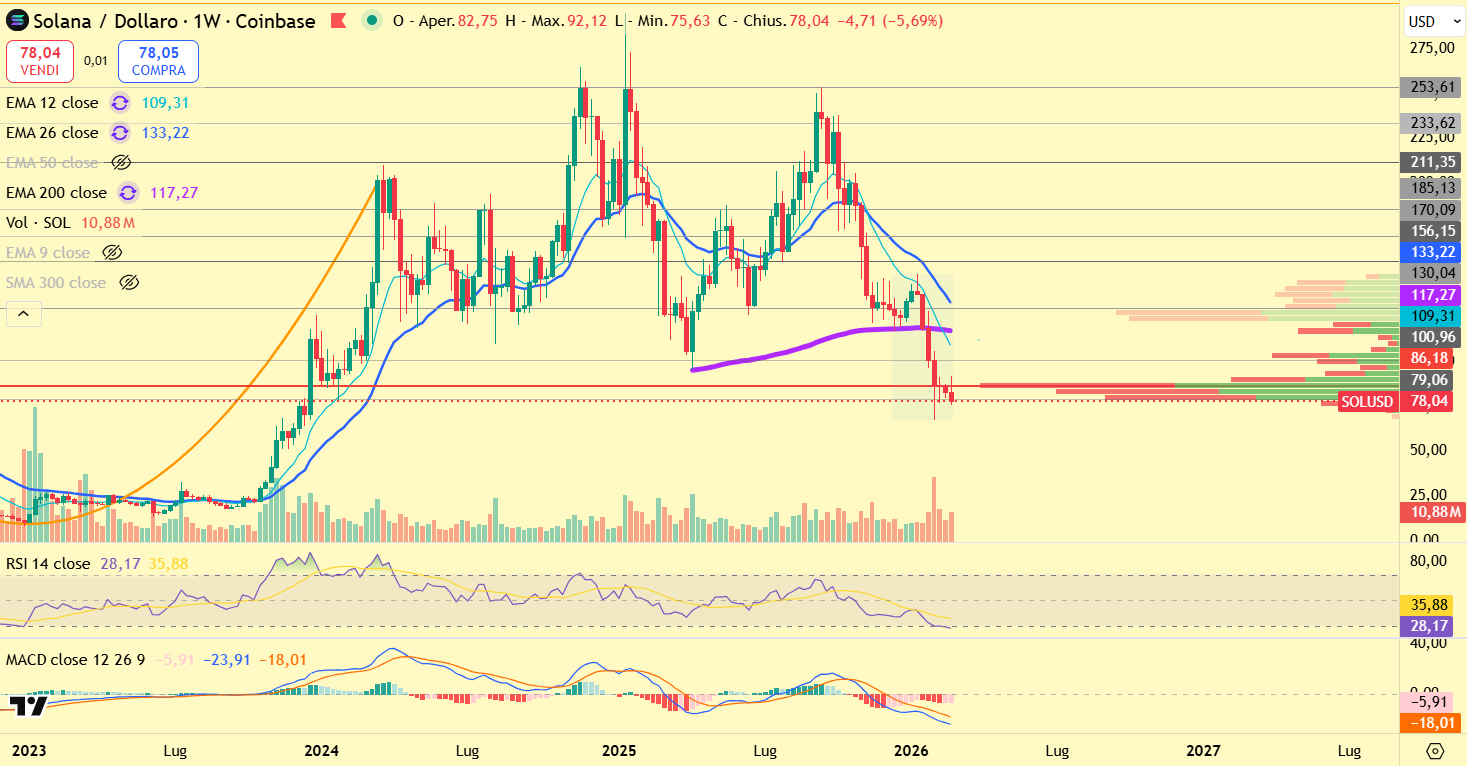
Technically, XRP enters 2026 in a consolidation phase. After peaking in the previous cycle, price action reflects digestion rather than trend exhaustion. Long term support zones remain intact, while upside progress depends on sustained demand rather than short term speculation.
This technical backdrop aligns with the broader XRP price outlook 2026 narrative. Structural changes tend to express themselves through extended ranges before directional resolution. Investors focused on long term positioning often view such phases as accumulation windows, while short term traders see them as range bound environments.
On Block2Learn, ongoing analysis of market structure and liquidity conditions is available in the Chart Analysis section https://block2learn.com/category/chart-analysis/. These resources help contextualize price behavior within broader macro and crypto cycles.
Regulatory landscape and US policy
Regulatory developments extend beyond Ripple’s settlement. Broader crypto legislation in the United States influences institutional appetite across the sector. Clear frameworks reduce friction for banks, custodians, and payment firms exploring blockchain integration.
Insights from the Federal Reserve https://www.federalreserve.gov highlight the importance of settlement efficiency and risk management in modern payment systems. While central bank infrastructure evolves separately from crypto, regulatory alignment increases the likelihood that private networks can coexist rather than compete directly.
For XRP, alignment with regulated finance is a double edged sword. It opens doors to institutions but also subjects the ecosystem to stricter oversight. The XRP price outlook 2026 reflects this balance between opportunity and constraint.
Risks that could derail the thesis
Despite improving fundamentals, several risks remain. One is execution risk. Infrastructure alone does not guarantee adoption at scale. Banks and payment providers move cautiously, often requiring years to integrate new systems.
Another concern is supply dynamics. Periodic token releases can weigh on market sentiment if not matched by demand growth. Transparency around token management is therefore critical to maintaining investor confidence.
Competition is also intensifying. Alternative settlement networks and stablecoin based solutions continue to evolve. If they achieve similar efficiency without relying on a volatile asset, XRP’s value proposition could weaken.
Finally, macro conditions matter. Risk off environments tend to suppress valuations across crypto assets, regardless of individual fundamentals. The XRP price outlook 2026 must be considered within the context of global liquidity and risk appetite.
A measured outlook for 2026
XRP enters 2026 with clearer rules, broader access, and a more mature ecosystem than at any point in its history. Institutional interest is no longer hypothetical but observable through products and partnerships. Yet the path forward depends on whether real world usage scales in a way that directly benefits token holders.
Rather than expecting abrupt repricing, a more realistic framework views 2026 as a year of validation. If volumes grow, institutions deepen involvement, and regulatory stability persists, the foundation for higher valuations strengthens. If not, XRP may continue to trade below perceived intrinsic value despite visible progress.
For readers seeking deeper context on crypto markets, regulation, and institutional trends, ongoing research is available on Block2Learn https://block2learn.com and in the Market Trends section https://block2learn.com/category/market-trends/. Understanding the XRP price outlook 2026 ultimately requires separating narrative from structure, and focusing on how capital actually moves rather than how stories are told.