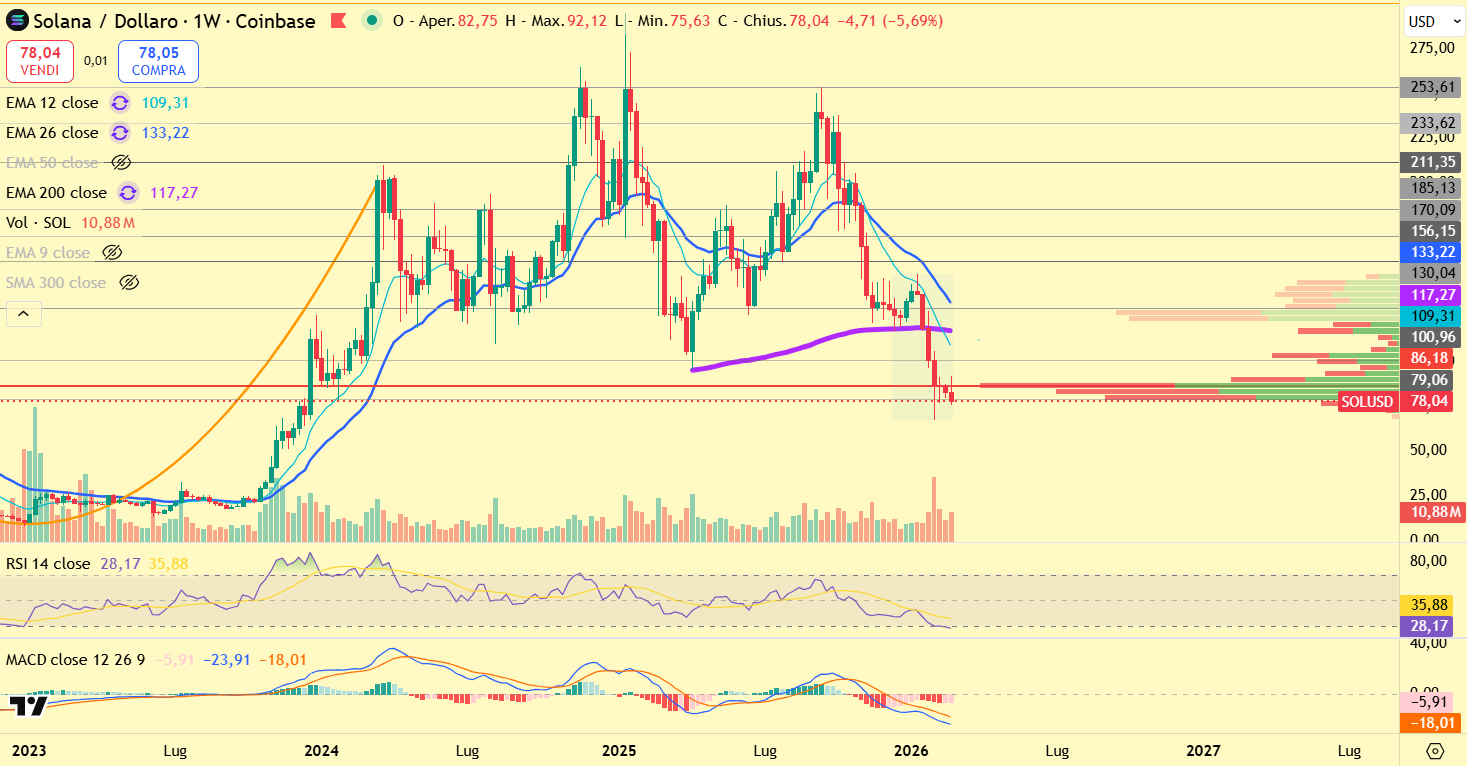
The crypto market crash warning triggered by renewed tariff escalation has reopened a macro risk channel that many investors believed was already priced in. The decision by Donald Trump to back legislation enabling tariffs of up to 500 percent on countries purchasing Russian oil has injected a sharp geopolitical shock into global markets. Crypto reacted immediately, not because of ideology or narratives, but because liquidity sensitive assets remain deeply exposed to global trade stress and risk off flows.
This crypto market crash warning is not about a single headline. It is about the reactivation of a macro transmission mechanism that historically hits digital assets harder than most investors expect.
Why the crypto market crash warning is macro driven
The current crypto market crash warning stems from a structural reality. Crypto markets are global, dollar denominated, and liquidity dependent. When trade tensions escalate at a scale that threatens global supply chains, capital allocation shifts rapidly.
A 500 percent tariff is not a symbolic measure. It is a de facto trade weapon aimed at countries that play a central role in global energy demand. India, China, and Brazil are not marginal players. They are core nodes in the global growth engine.
When macro uncertainty spikes, leveraged exposure is the first to unwind. Crypto, still heavily intertwined with speculative capital, becomes an early casualty.
The tariff mechanism and why it matters for crypto
The legislation supported by Trump enables punitive tariffs on imports from countries buying Russian oil, gas, or uranium. The stated goal is to restrict funding linked to Russia’s war economy. The market impact, however, extends far beyond geopolitics.
Tariffs of this magnitude function as a shock to global trade expectations. They raise inflation risk, reduce growth visibility, and force central banks and investors to reassess risk exposure.
This is precisely why the crypto market crash warning resonates. Crypto does not operate in isolation. It is increasingly correlated with global liquidity conditions, especially during periods of stress.
Immediate market response and liquidity dynamics
Within hours of the announcement, total crypto market capitalization dropped sharply. Bitcoin and major altcoins moved lower in unison, reflecting a broad based risk reduction rather than asset specific weakness.
This pattern matters. When correlations rise across crypto assets, it signals forced positioning adjustments rather than selective selling. Liquidations tend to accelerate when macro shocks collide with leveraged structures.
The crypto market crash warning echoes previous episodes where geopolitical or trade shocks triggered cascading liquidations across derivatives markets.
Historical context: the 2025 tariff stress test
Markets have seen this movie before. In late 2025, tariff threats tied to US China trade tensions triggered one of the largest single day liquidation events in crypto history.
That episode demonstrated a critical lesson. Crypto does not behave as a hedge during trade wars. It behaves as a high beta liquidity asset.
Bitcoin fell sharply alongside altcoins, not because of protocol risk, but because macro traders treated crypto exposure as expendable when volatility spiked.
The current crypto market crash warning reflects fears that a similar liquidity cascade could unfold if tariff rhetoric translates into sustained policy action.
Emerging markets as a transmission channel
One of the most underappreciated aspects of this crypto market crash warning is the role of emerging markets. Countries directly targeted by the tariff policy are deeply integrated into global capital flows.
When equity markets in emerging economies come under pressure, global funds often reduce exposure across correlated risk assets. Crypto is increasingly part of that basket.
India’s equity market reaction is a relevant signal. Sharp declines in benchmark indices often precede broader risk reduction across global portfolios.
This is not about crypto fundamentals. It is about portfolio construction under stress.
Bitcoin’s position in a risk off environment
Bitcoin remains the bellwether for crypto risk sentiment. During periods of macro stress, Bitcoin’s behavior provides clues about market structure.
In true systemic crises, Bitcoin does not immediately act as digital gold. Instead, it often sells off first as leveraged exposure is unwound. Only later, if monetary responses follow, does the hedge narrative re emerge.
The crypto market crash warning should therefore be interpreted in phases. Initial sell offs are liquidity driven. Secondary phases depend on policy responses, monetary easing, or stabilization of trade expectations.
For deeper analysis of Bitcoin’s role within macro cycles, see Block2Learn research: https://block2learn.com/category/bitcoin/.
Altcoins and the amplification effect
Altcoins magnify macro shocks. Lower liquidity, higher leverage, and thinner order books mean that risk off flows hit them disproportionately.
This amplification is already visible. Larger percentage declines across Ethereum, Solana, and other major tokens indicate defensive positioning rather than project specific concerns.
The crypto market crash warning is therefore asymmetric. Even if Bitcoin stabilizes, altcoins may continue to underperform until macro clarity improves.
Why tariffs matter more than headlines suggest
Many investors underestimate tariffs because they focus on political theater. Markets focus on second order effects.
Tariffs raise input costs, disrupt trade flows, and complicate inflation management. This increases uncertainty around interest rates, growth, and corporate earnings.
Crypto markets react to this uncertainty because they remain sensitive to global dollar liquidity. When liquidity tightens, speculative exposure is reduced.
For macro data and trade flow analysis, see World Bank resources: https://www.worldbank.org/.
Risk repricing versus systemic collapse
It is important to distinguish between a crypto market crash warning and an inevitable crash. What markets are experiencing now is risk repricing.
Repricing reflects uncertainty, not necessarily collapse. The magnitude and duration of the move will depend on how policy evolves and whether tariffs are implemented aggressively or used as negotiation leverage.
However, history suggests that markets rarely ignore sustained trade escalation. Volatility remains elevated until clarity emerges.
Institutional positioning and derivatives pressure
Another factor behind the crypto market crash warning is derivatives positioning. Open interest across crypto futures remains elevated relative to spot liquidity.
When macro shocks hit, this imbalance becomes dangerous. Forced liquidations can push prices lower than fundamentals would justify.
Institutional traders are acutely aware of this dynamic. Many reduce exposure preemptively, contributing to downside pressure.
This is not panic. It is risk management.
What to monitor next
The crypto market crash warning will evolve based on several variables. First, confirmation of tariff implementation timelines. Second, responses from targeted countries. Third, signals from global central banks regarding inflation and growth trade offs.
If trade tensions escalate further, risk assets remain vulnerable. If negotiations soften rhetoric, markets may stabilize.
For ongoing macro and policy analysis, explore Block2Learn coverage: https://block2learn.com/category/macroeconomics/.
A structural reminder for crypto investors
This episode serves as a reminder that crypto is no longer insulated from global macro forces. Adoption, institutional participation, and derivatives markets have tied crypto more tightly to traditional risk cycles.
The crypto market crash warning is therefore not an anomaly. It is a feature of crypto’s maturation.
As crypto integrates into global finance, it inherits global vulnerabilities.
Looking beyond the short term
In the long run, geopolitical fragmentation and trade wars may actually strengthen the case for neutral settlement layers and permissionless networks. But markets do not price long term narratives during acute stress.
Short term, liquidity rules. Long term, infrastructure matters.
Understanding this distinction is essential for navigating periods like the current one.
The crypto market crash warning is not about fear. It is about recognizing that macro shocks still dominate price action when uncertainty spikes. Those who ignore that reality risk confusing conviction with complacency.