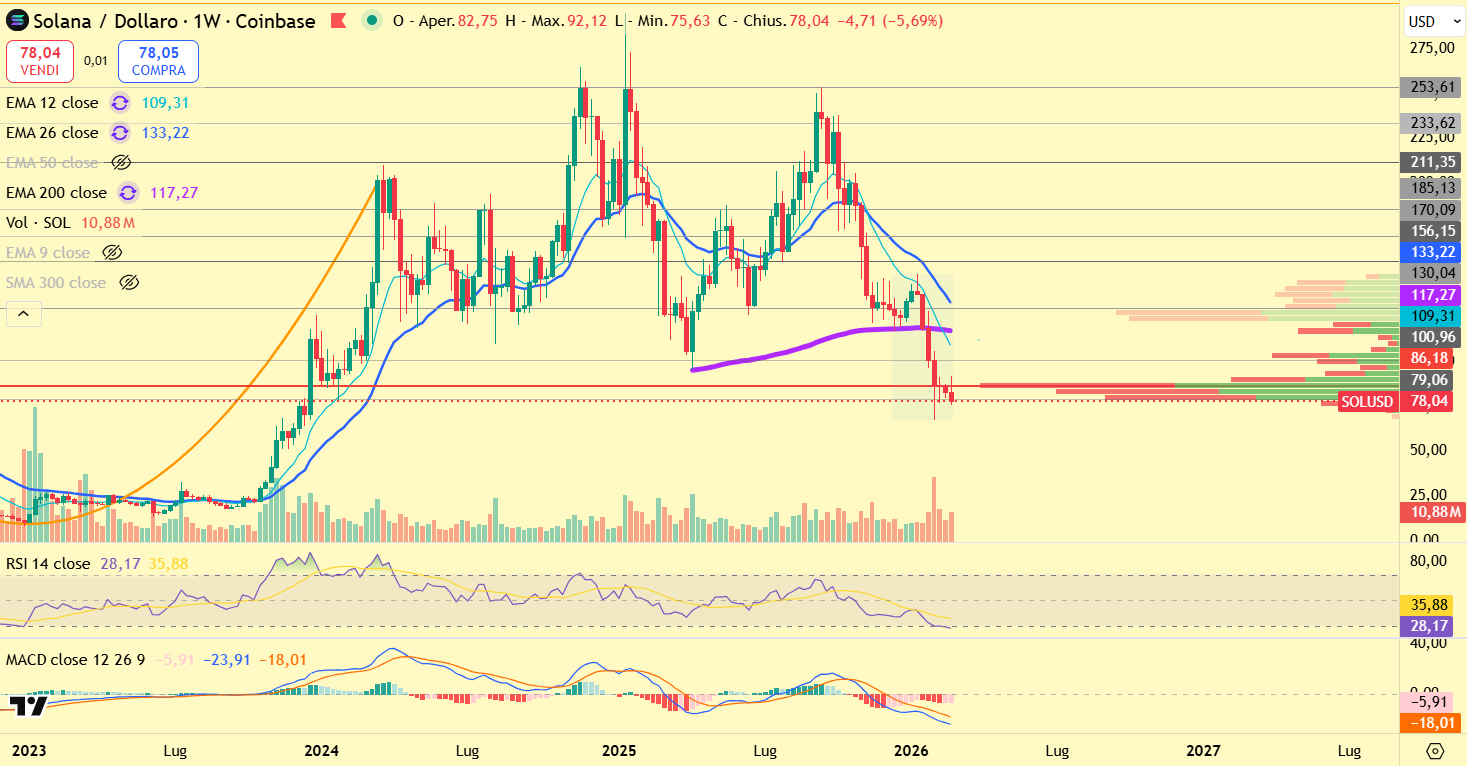


US government shutdown crypto impact is rapidly becoming one of the most underestimated macro risk factors for digital asset markets at the start of 2026. While traders remain focused on interest rate decisions, inflation data, and Federal Reserve communication, a parallel political risk is quietly escalating and could disrupt market structure more than headline price action suggests.
The probability of a US government shutdown has surged sharply in recent days, driven by legislative gridlock and mounting political pressure ahead of the federal funding deadline. This is not merely a political story. Historically, government shutdowns have had tangible consequences for market liquidity, data transparency, and investor behavior, all of which are critical inputs for crypto price discovery.
As the deadline approaches, crypto markets are entering a period where macro uncertainty is stacking rather than rotating.
Rising Shutdown Probability and Market Signal Distortion
Prediction market data indicates that the likelihood of a shutdown has climbed above 76%. While such markets are not deterministic, they often capture shifts in sentiment before traditional indicators respond.
Source Polymarket: https://polymarket.com
The core issue is straightforward. A $1.2 trillion federal funding package has cleared the House but still requires approval from the Senate. Without sufficient votes before the deadline, large segments of the federal government would suspend non essential operations.
For financial markets, the immediate concern is not government services themselves, but the disruption of data flows that markets rely on to price risk accurately.
Why Data Visibility Matters More Than Politics
Crypto markets are uniquely sensitive to information gaps. Unlike traditional equities, digital assets trade continuously across global venues with limited centralized oversight. Price formation depends heavily on macro signals such as inflation readings, labor data, and policy guidance.
During past shutdowns, agencies responsible for publishing critical economic indicators delayed or suspended releases. This created blind spots where traders were forced to operate without reliable reference points.
The US government shutdown crypto impact historically manifests less through panic selling and more through volatility driven by uncertainty. When traders cannot anchor expectations to data, liquidity thins and risk premiums expand.
Lessons From Previous Shutdown Cycles
The most recent prolonged shutdown offers a useful reference. While crypto did not experience systemic failure, price volatility increased materially.
Bitcoin experienced a sharp drawdown during that period, declining approximately 9% over a short window. Altcoins fared worse, with losses ranging from 12% to over 25% as liquidity evaporated and speculative positioning was unwound.
These moves were not driven by fundamentals deteriorating overnight. They reflected positioning stress, reduced leverage tolerance, and a flight toward liquidity.
Understanding this pattern is critical for assessing current risk.
Senate Dynamics and Legislative Fragility
The uncertainty surrounding the Senate vote is a key driver of elevated shutdown odds. Passage requires a supermajority threshold, meaning bipartisan cooperation is essential.
Political tensions have intensified following recent high profile incidents involving federal agencies, adding another layer of complexity to negotiations. These issues extend beyond budget numbers and touch on accountability, governance, and institutional trust.
For markets, this matters because prolonged negotiations increase the likelihood of last minute outcomes, which tend to amplify volatility rather than resolve it cleanly.
The Macro Stack Facing Crypto Markets
The timing of this political risk could not be more challenging for crypto. Markets are already digesting multiple high impact events, including Federal Reserve decisions, inflation data releases, and regulatory developments tied to crypto market structure.
Each of these elements independently affects liquidity and positioning. Combined, they create a compressed risk window where outcomes can cascade.
The US government shutdown crypto impact must therefore be evaluated as part of a broader macro stack rather than a standalone event.
For ongoing macro analysis, see Block2Learn Macroeconomics: https://block2learn.com/category/macroeconomics/
Liquidity Risk and Altcoin Sensitivity
While Bitcoin often absorbs macro shocks with relative resilience, altcoins remain significantly more exposed. Their market depth is thinner, and their investor base is more sensitive to changes in risk sentiment.
During periods of uncertainty, capital tends to consolidate into assets perceived as safer or more liquid. In crypto, that typically means Bitcoin and stablecoins.
This dynamic suggests that even if a shutdown does not trigger a broad market collapse, it could accelerate rotation away from speculative segments.
Regulatory Visibility and Market Confidence
Another underappreciated consequence of a shutdown is the impact on regulatory processes. Agencies involved in market oversight and policy implementation may pause non essential work, delaying guidance and enforcement clarity.
For crypto markets already navigating evolving regulatory frameworks, this delay compounds uncertainty. Market participants are forced to price risk without clear signals on compliance, enforcement, or legislative timelines.
The US government shutdown crypto impact therefore extends beyond price action into structural confidence.
More context on regulatory dynamics can be found on Block2Learn Crypto Regulation: https://block2learn.com/category/crypto-regulations/
Information Asymmetry and Volatility Expansion
When official data flows slow, alternative data sources gain influence. Onchain metrics, funding rates, and derivatives positioning become more prominent in trader decision making.
While this can benefit sophisticated participants, it increases information asymmetry across the market. Retail traders operating without macro context are more likely to react emotionally to price movements.
This environment often produces exaggerated swings that do not reflect long term value, but rather short term positioning stress.
Stablecoins as a Temporary Shelter
In previous episodes of macro uncertainty, stablecoins have acted as a temporary refuge for crypto capital. Traders reduce exposure to volatility while remaining within the ecosystem.
If shutdown risk escalates further, demand for stablecoin liquidity could increase, reinforcing trends already visible in onchain yield markets.
For more insight into stablecoin behavior, see Block2Learn Stablecoin research: https://block2learn.com/category/stablecoin/
Broader Market Interconnections
Crypto does not operate in isolation. Equity markets, bond yields, and currency movements all feed into digital asset pricing indirectly.
A government shutdown introduces friction into traditional markets as well. Delayed data can affect rate expectations, equity valuations, and risk appetite globally.
These effects can spill over into crypto, amplifying moves even if crypto specific fundamentals remain unchanged.
Strategic Interpretation for Investors
The key takeaway is not that a shutdown guarantees a crash. History suggests otherwise. Instead, the risk lies in volatility amplification and liquidity contraction.
The US government shutdown crypto impact is best understood as a stress test for market structure rather than a directional catalyst.
Investors with a long term horizon should focus on capital preservation and positioning discipline. Traders should be prepared for sudden moves driven by headlines and data gaps rather than organic market trends.
Structural Outlook
As digital assets mature, their sensitivity to macro and political risk increases rather than decreases. Integration into global financial systems brings both legitimacy and exposure.
A potential government shutdown serves as a reminder that crypto markets are no longer insulated from institutional dysfunction. They react to it, sometimes more sharply than traditional assets.
Whether or not a shutdown ultimately occurs, the elevated probability alone introduces friction that markets must price.
The coming days will reveal whether political resolution restores visibility or prolongs uncertainty. In either case, crypto markets are entering a phase where patience and risk management matter more than conviction trades.