The WLFI ownership uncertainty has become one of the most discussed risk factors surrounding the project, as political influence, foreign capital, and market structure collide in a moment of heightened sensitivity for crypto markets. Recent reports suggesting a large scale acquisition involving entities linked to the Trump family and Middle Eastern capital have forced public clarification from the former US president himself, yet those clarifications have done little to reduce investor unease.
At the center of the controversy lies World Liberty Financial, a project that has attracted attention not only for its ambitions but also for the network of individuals and institutions orbiting around it. The market reaction over the past several sessions suggests that traders are pricing uncertainty rather than fundamentals, a dynamic that often persists until ownership and governance questions are fully resolved.
Trump’s public response and its implications
The WLFI ownership uncertainty escalated when President Donald Trump directly addressed reports concerning a purported strategic deal involving his family and foreign investors. Speaking to reporters, Trump stated plainly, “I don’t know about it,” adding that the matter was being managed independently by his family. He further clarified, “My sons are handling that… my family is handling it.”
This distancing is notable. While Trump did not deny the existence of external investments linked to WLFI, he emphasized that any such arrangements were outside his direct involvement. He added, “I guess they get investments from different people,” framing the issue as a private business matter rather than a political or presidential concern.
From a market perspective, this response introduces ambiguity rather than clarity. When a figure of Trump’s stature publicly separates himself from a project that markets often associate with his name, it raises questions about accountability, influence, and long term strategic direction.
Reported deal structure and strategic context
According to multiple reports circulating in recent days, a forty nine percent stake in WLFI was acquired by a UAE based investment entity in a transaction valued near five hundred million dollars. The agreement was reportedly finalized shortly before Trump’s second inauguration, at a time when WLFI had not yet launched live products or demonstrated operational traction.
The acquiring entity, Aryam Investment, is linked to Sheikh Tahnoon bin Zayed Al Nahyan, the United Arab Emirates national security advisor and brother of the country’s president. Sheikh Tahnoon also chairs MGX and G42, two firms heavily involved in artificial intelligence and strategic technology investments.
Despite the scale of the transaction, available information suggests that the stake does not confer governance or token control rights. This distinction matters, yet it does not fully address investor concerns. A near majority economic interest without operational transparency still alters the perceived balance of influence around the project.
The WLFI ownership uncertainty therefore stems not only from who owns what, but from how much influence accompanies that ownership.
Why ownership clarity matters in crypto markets
In traditional markets, ownership structures are often well documented and regulated. In crypto markets, however, opacity around ownership and control has repeatedly proven to be a source of volatility.
The WLFI ownership uncertainty mirrors past situations where unclear stakeholder influence led to prolonged valuation pressure. Investors are not simply reacting to headlines but attempting to assess whether incentives between founders, external capital, and token holders are aligned.
When large stakes are sold before product launch, markets often interpret this as early monetization rather than long term conviction. Whether that interpretation is fair or not, it influences short term price behavior.
For broader analysis on governance risk in crypto projects, see https://block2learn.com/category/crypto-regulations/.
Market reaction and price behavior
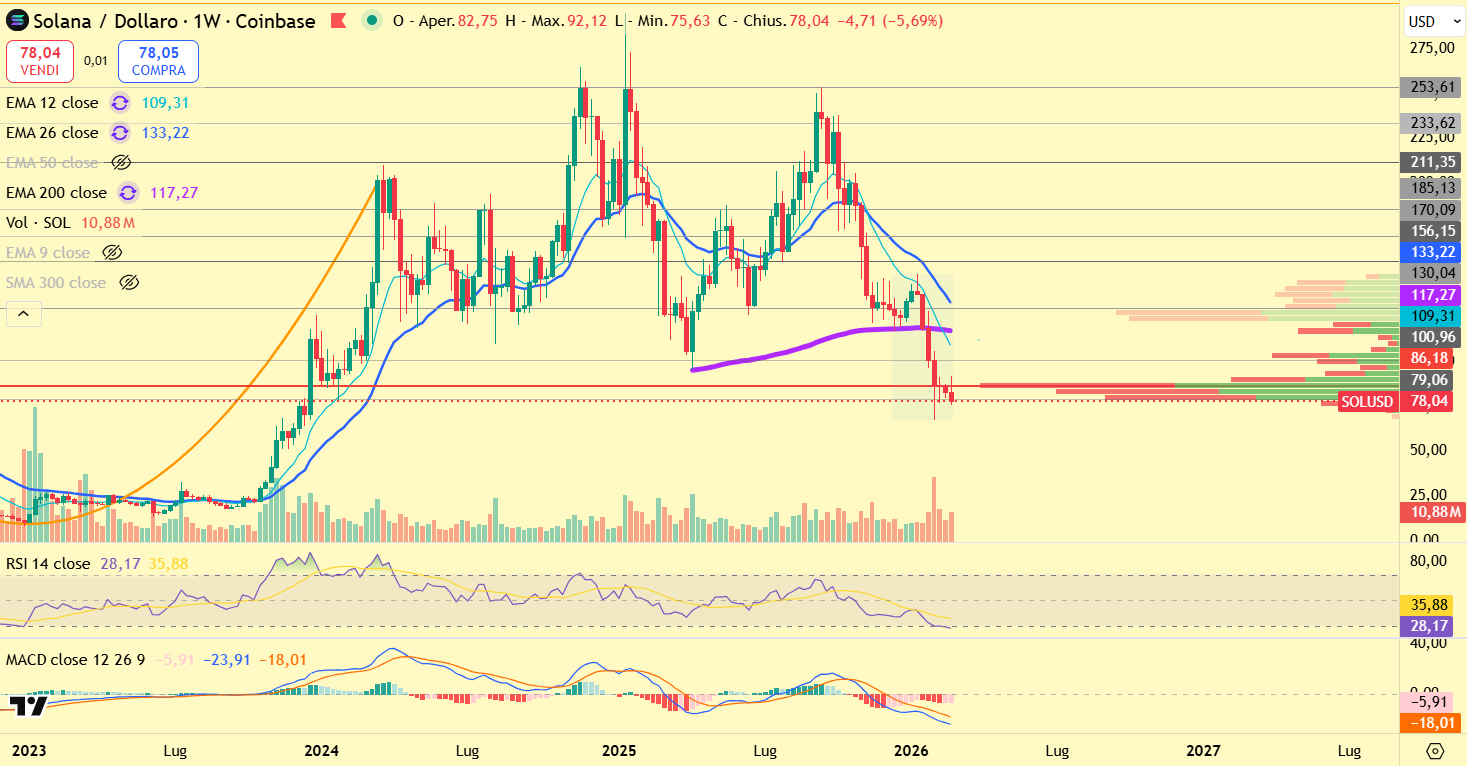
Price action has reflected this uncertainty. WLFI has declined more than twenty percent from recent local highs, briefly trading near the thirteen cent area before attempting a weak consolidation. Daily charts show persistent selling pressure, with red candles clustering toward the end of January.
Momentum indicators confirm this picture. Relative strength readings have hovered near oversold territory, indicating sustained bearish control rather than a temporary pullback. While minor buying interest appeared near local lows, there has been no decisive shift in trend structure.
This type of price behavior is typical when markets lack a clear narrative anchor. Without confidence in ownership clarity or strategic direction, traders tend to sell rallies rather than accumulate dips.
For technical context on similar market structures, see https://block2learn.com/category/chart-analysis/.
The political dimension of WLFI ownership uncertainty
The involvement of politically exposed individuals adds another layer of complexity. Projects perceived to have ties to major political figures often attract speculative interest, but they also face higher scrutiny.
Trump’s attempt to publicly separate himself from WLFI related deal reports may be intended to reduce political risk. However, from a market standpoint, it creates a vacuum of clarity. Investors are left asking who ultimately shapes the project’s future if not the figure most associated with its public narrative.
This dynamic is not unique to WLFI. Crypto markets have repeatedly struggled with projects whose branding relies heavily on personalities rather than transparent structures.
Foreign capital and strategic signaling
The reported involvement of Middle Eastern capital introduces strategic signaling considerations. Large scale investments from sovereign linked entities are often interpreted as long term endorsements. Yet timing and structure matter.
A significant stake acquired before product launch and without disclosed governance rights raises questions about strategic intent. Is the investment purely financial, or does it represent optionality for future influence.
The WLFI ownership uncertainty persists precisely because these questions remain unanswered.
For institutional capital flows and their impact on crypto markets, see https://block2learn.com/category/market-trends/.
Broader implications for investor confidence
Investor confidence is shaped not only by fundamentals but by trust in transparency. Even if the reported stake does not include governance rights, the absence of clear documentation fuels speculation.
Markets tend to price worst case scenarios when information is incomplete. In this case, that means prolonged downside pressure until clarity emerges.
Trump’s denial, while direct, did not provide the level of detail markets typically seek. It confirmed distance but not structure.
What could restore clarity
Resolution of the WLFI ownership uncertainty will likely require formal disclosures. Clear documentation of ownership, voting rights, and strategic roles would go a long way toward stabilizing sentiment.
Additionally, progress on product delivery could shift focus away from ownership debates toward execution. Markets are more forgiving of complex structures when operational performance validates long term value.
Until then, price action is likely to remain sensitive to headlines and speculation.
Regulatory and reputational considerations
Given the involvement of politically exposed individuals and foreign capital, regulatory attention is another variable. While no formal action has been announced, projects operating at the intersection of finance, politics, and crypto often face enhanced scrutiny.
For regulatory data and frameworks relevant to cross border investments, see https://www.sec.gov and https://www.bis.org.
Final perspective
The WLFI ownership uncertainty is not merely a headline driven issue. It reflects deeper concerns about transparency, influence, and alignment in a market already on edge.
Trump’s public distancing has clarified one thing only. The project’s future will not be shaped by his direct involvement. What remains unclear is who fills that strategic void.
Until ownership and governance questions are resolved with precision, markets are likely to continue pricing uncertainty rather than potential.
For ongoing research and analysis, explore https://block2learn.com.