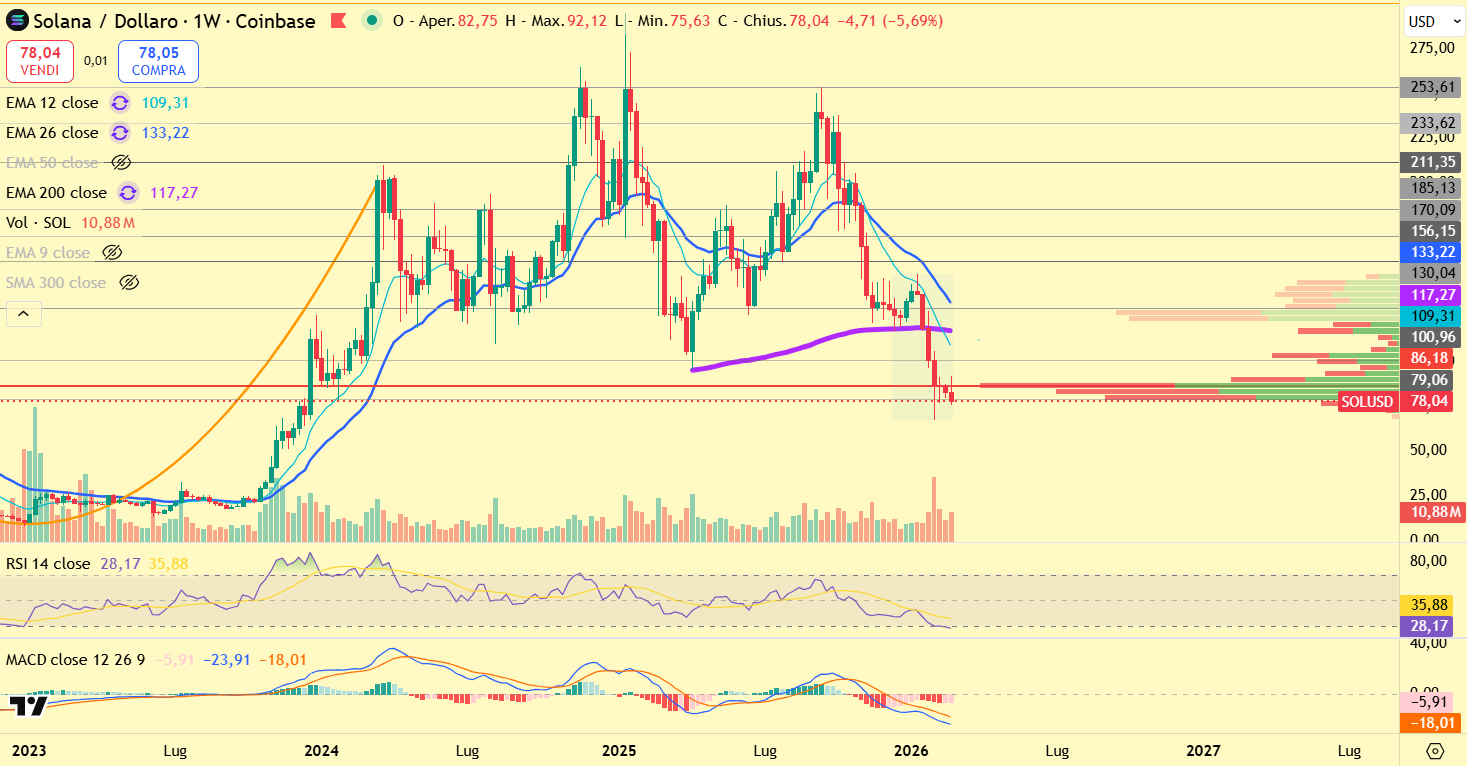
The latest crypto market crash was not driven by panic selling from retail investors, nor by a sudden deterioration in fundamentals. Instead, the dominant force behind the violent repricing was institutional risk management reacting to a sharp regime shift in volatility, liquidity, and cross asset correlations.
Understanding this episode requires moving beyond headlines and focusing on how modern institutional portfolios behave under stress. The institutional risk management crypto crash was a mechanical event, triggered by internal risk controls rather than discretionary market views.
The anatomy of an institutional unwind
Institutional capital behaves differently from long term conviction based investors. Large funds operate under strict risk constraints that are enforced automatically when volatility spikes, correlations tighten, or liquidity deteriorates.
When those thresholds are breached, risk must be reduced immediately. This process is not negotiable, and it does not wait for better prices.
The recent crypto collapse reflects exactly this dynamic. As Bitcoin volatility surged and liquidity thinned, risk systems across hedge funds, multi strategy portfolios, and relative value desks simultaneously signaled the need to cut exposure.
The institutional risk management crypto crash therefore unfolded not because institutions turned bearish on Bitcoin, but because their models forced them to exit.
Fast money versus long duration capital
A key distinction in this cycle is the role of fast money. A significant portion of institutional crypto exposure is not directional. It is deployed in delta hedged strategies, basis trades, or relative value setups designed to exploit funding rates, spreads, or volatility differentials.
This capital is inherently unstable during regime shifts. When funding costs rise, volatility expands, or margin requirements increase, these strategies lose their edge. At that point, the only rational response is to unwind.
During the recent crash, this fast money exited en masse. The institutional risk management crypto crash was amplified because many funds held similar positions and were forced to liquidate simultaneously.
Volatility as the primary trigger
Volatility was the central catalyst. Bitcoin implied volatility surged to levels not seen since the early days of spot ETF trading. This was a critical inflection point.
Low volatility had previously attracted leverage. As long as price moved slowly and predictably, risk adjusted returns looked attractive. Once volatility spiked, that entire framework collapsed.
Risk systems are explicitly designed to respond to volatility shocks. When volatility exceeds predefined limits, exposure must be reduced regardless of price direction or long term outlook.
This is why selling accelerated precisely as volatility rose. The institutional risk management crypto crash was volatility driven first, price driven second.
Liquidity collapse magnified the damage
Liquidity is often assumed to be constant until it disappears. In stressed markets, liquidity vanishes quickly.
As institutional selling began, order book depth collapsed. Large market orders moved price aggressively, triggering stop losses and margin calls. This fed back into volatility, creating a self reinforcing loop.
The absence of passive buyers was critical. Many participants who would normally provide liquidity stepped aside due to uncertainty, widening spreads and increasing slippage.
In this environment, selling pressure does not need to be massive to cause extreme moves. The institutional risk management crypto crash was magnified by a simultaneous liquidity vacuum.
Correlation risk and cross asset spillover
Another underappreciated factor was correlation risk. Crypto does not trade in isolation. During periods of macro stress, correlations across asset classes tend to converge toward one.
As growth equities, risk assets, and crypto moved together, institutional portfolios faced compounded risk. This forced managers to reduce exposure broadly rather than selectively.
In such scenarios, even assets with strong individual narratives are sold to manage aggregate portfolio risk. Bitcoin was not singled out. It was caught in a wider deleveraging process.
The institutional risk management crypto crash was therefore part of a broader risk off adjustment, not a crypto specific failure.
ETF structure and structural sensitivity
The presence of spot Bitcoin ETFs has changed market structure. While they have increased access and participation, they have also introduced new sensitivities.
Institutional ETF holders often operate under tighter risk constraints than native crypto investors. When volatility spikes, ETF positions are easier to unwind than on chain holdings.
This structural feature contributed to selling pressure. ETF driven exposure proved more responsive to volatility shocks, reinforcing the speed of the unwind.
However, this does not imply ETF failure. It reflects the behavior of institutional capital under stress.
Common holder risk and crowded exits
One of the most damaging dynamics during the crash was common holder risk. When multiple funds hold similar positions and rely on similar risk models, exits become crowded.
Once the first wave of selling begins, others are forced to follow, regardless of individual conviction. This creates a narrow exit door through which too much capital attempts to pass at once.
The result is disproportionate price impact. The institutional risk management crypto crash exhibited classic common holder behavior, with downside correlation converging rapidly.
Why fundamentals were irrelevant in real time
A recurring frustration during crashes is the disconnect between fundamentals and price. Network health, adoption metrics, and long term narratives did not deteriorate meaningfully during this event.
Yet price collapsed.
This is not a contradiction. In liquidation driven markets, fundamentals do not set price. Risk management does. Fundamentals reassert influence only after forced selling ends and liquidity stabilizes.
Understanding this distinction is critical. The institutional risk management crypto crash was not a verdict on Bitcoin’s long term viability. It was a consequence of portfolio mechanics.
Clearing leverage is a prerequisite for recovery
While painful, these episodes serve a structural purpose. Excess leverage must be cleared for markets to reset.
As positions are liquidated and risk reduced, volatility eventually subsides. Once risk metrics normalize, capital can re enter more cautiously.
This process is nonlinear. It often feels chaotic and unjustified while it unfolds. But it is a necessary step toward rebuilding a healthier market structure.
The institutional risk management crypto crash should be viewed as part of this cleansing cycle.
Why repricing can be fast after stabilization
One of the paradoxes of forced selling events is that recovery can be rapid once pressure eases. When selling is mechanical rather than belief driven, the absence of sellers can quickly shift the balance.
As volatility declines and liquidity returns, capital that exited under duress may re enter opportunistically. This can lead to sharp repricing over short periods.
However, such rebounds should not be confused with the return of a stable uptrend. They reflect normalization, not necessarily expansion.
What market participants should take away
The primary lesson from this event is structural. Crypto markets are increasingly shaped by institutional behavior. That brings depth and legitimacy, but also introduces new forms of instability.
Participants must recognize that volatility regimes matter more than narratives during stress. Risk is not priced continuously. It is repriced discretely when thresholds are breached.
The institutional risk management crypto crash highlights why understanding market structure is as important as understanding technology.
Data confirms the volatility shock
Options markets clearly reflected the regime shift. Implied volatility surged above levels seen in traditional safe havens, signaling a breakdown of the low volatility environment that had supported leverage.
For reference on volatility metrics and derivatives positioning, CME Group provides transparent data on crypto volatility products: https://www.cmegroup.com
This data underscores that the crash was not an anomaly, but a statistically coherent response to a volatility shock.
The broader cycle perspective
From a cycle perspective, this event marks a transition. The market has moved from complacency to stress, from leverage expansion to leverage reduction.
Such transitions are uncomfortable but necessary. They reset expectations and reprice risk more honestly.
For ongoing analysis of crypto market structure, volatility regimes, and risk dynamics, additional research is available on Block2Learn: https://block2learn.com/category/market-trends/
In the end, the recent collapse was not about fear or loss of faith. It was about systems doing what they are designed to do under pressure. The institutional risk management crypto crash is a reminder that in modern markets, structure often matters more than story.