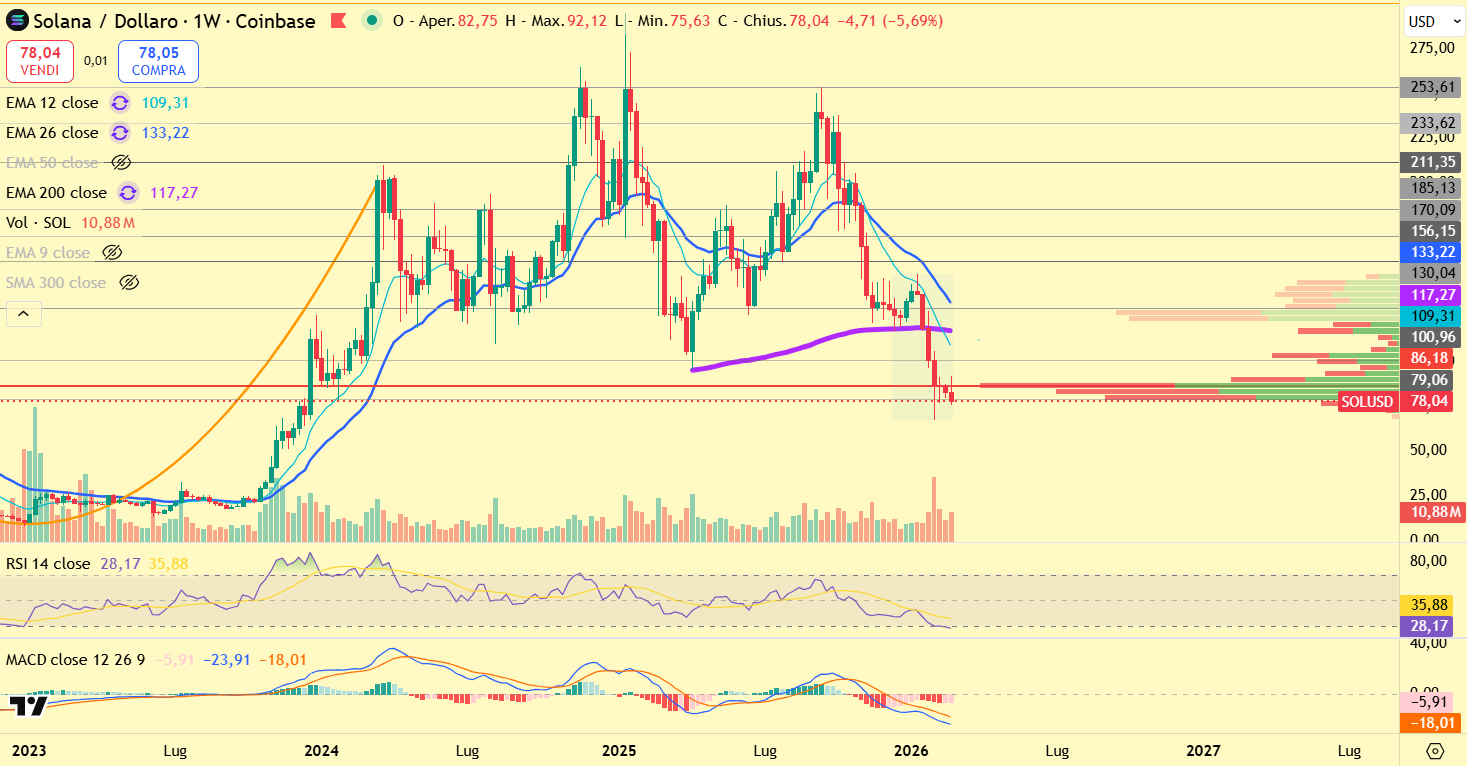
As crypto markets slide deeper into risk off territory, corporate conviction around Bitcoin is being tested in real time. Falling prices, collapsing sentiment, and widening unrealized losses have forced many participants to reassess their exposure. Yet amid this environment, some companies are choosing not to retreat, but to double down.
One of the most notable examples is Metaplanet, a Tokyo listed firm that has publicly reaffirmed its commitment to a Bitcoin first balance sheet strategy despite sharp drawdowns in both its equity price and the broader digital asset market.
This article examines the Metaplanet Bitcoin strategy, not as a headline reaction to market stress, but as part of a wider structural shift in how corporations are using Bitcoin on their balance sheets.
Market stress exposes conviction gaps
The current market environment is defined by capitulation rather than orderly rotation. Bitcoin has retraced aggressively from its prior highs, dragging sentiment indicators toward levels historically associated with systemic fear. Liquidity has thinned, leverage has been flushed, and volatility has reasserted itself as the dominant regime.
In such conditions, corporate treasuries holding Bitcoin face a simple but uncomfortable reality. Unrealized losses expand quickly, equity volatility spikes, and external pressure mounts from shareholders focused on short term performance.
It is precisely in these phases that long term strategies are either abandoned or reinforced. The Metaplanet Bitcoin strategy has so far fallen into the latter category.
Metaplanet’s positioning within the corporate Bitcoin landscape
Metaplanet is not a marginal participant in the corporate Bitcoin space. It ranks among the largest publicly disclosed Bitcoin holders globally, positioning itself alongside firms that have explicitly adopted Bitcoin as a core treasury asset rather than a speculative allocation.
Unlike diversified balance sheets that treat crypto exposure as an optional side bet, Metaplanet’s approach is explicit and directional. Bitcoin is not a hedge within a broader framework. It is the framework.
This distinction matters. When Bitcoin is treated as a reserve asset, drawdowns are evaluated differently. The relevant question shifts from short term mark to market impact toward long term survivability, capital structure alignment, and duration.
Unrealized losses are not liquidation pressure
One of the most misunderstood aspects of corporate Bitcoin holdings is the difference between unrealized losses and operational stress. Falling prices create negative optics, but they do not automatically translate into liquidity risk.
The Metaplanet Bitcoin strategy does not rely on periodic Bitcoin sales to fund operations. As a result, price declines primarily affect reported valuations and investor sentiment, not day to day solvency.
This mirrors a broader pattern seen across Bitcoin focused treasuries. As long as debt maturities are distant and operating cash flow remains intact, volatility remains a balance sheet variable rather than a forcing function.
Sentiment collapse and strategic asymmetry
What makes the current environment particularly challenging is the depth of sentiment deterioration. Fear indicators have reached levels associated with historical crisis events, while liquidation data confirms that leverage has been aggressively unwound.
Paradoxically, this is often the environment in which asymmetry begins to rebuild. Forced sellers exit not because fundamentals have collapsed, but because risk tolerance has vanished.
By continuing accumulation during periods of extreme pessimism, the Metaplanet Bitcoin strategy implicitly bets on long term convexity rather than near term stability. This is not a forecast. It is a positioning choice.
Why corporations keep choosing Bitcoin
The persistence of corporate Bitcoin strategies during drawdowns raises a broader question. Why do companies continue to choose Bitcoin despite its volatility?
The answer lies less in price expectations and more in monetary structure. Bitcoin offers a fixed supply asset with global liquidity and no counterparty risk. In a world defined by expanding sovereign debt and currency debasement, this profile remains uniquely differentiated.
For firms like Metaplanet, Bitcoin functions less as a growth asset and more as an alternative reserve. Volatility is the cost of admission, not a flaw in the design.
Equity markets amplify pressure
While balance sheet logic may support long term accumulation, equity markets operate on different incentives. Share prices reflect sentiment, expectations, and time preference far more than structural positioning.
Metaplanet’s equity drawdown highlights this disconnect. As Bitcoin fell, equity investors reacted swiftly, repricing risk and discounting future uncertainty. This amplification effect is common among Bitcoin exposed equities, which often behave like leveraged proxies rather than neutral holding vehicles.
The Metaplanet Bitcoin strategy therefore faces a dual audience. One focused on long term capital preservation, the other on near term equity performance.
Strategic patience versus market impatience
This tension between strategy and sentiment defines the current phase. Market participants are demanding clarity at a time when uncertainty is highest. Corporate treasuries committed to Bitcoin must therefore operate under sustained scrutiny.
Maintaining consistency through these periods requires more than conviction. It requires capital discipline, liquidity planning, and an acceptance that volatility will test both internal governance and external perception.
Metaplanet’s public reaffirmation of its strategy signals that management views the current drawdown as a phase within a longer cycle, not as a structural failure.
Bitcoin treasuries as a structural trend
The persistence of Bitcoin accumulation among corporate treasuries suggests that this is no longer an isolated phenomenon. It is evolving into a structural trend.
Companies adopting Bitcoin as a reserve asset are implicitly rejecting traditional treasury orthodoxy. They are opting out of low yield cash equivalents in favor of a volatile but scarce asset with long term monetary optionality.
The Metaplanet Bitcoin strategy fits squarely within this emerging class. Whether this approach ultimately succeeds will depend less on short term price recovery and more on macro conditions, regulatory clarity, and balance sheet resilience.
Data context and transparency
Understanding the scale and distribution of corporate Bitcoin holdings requires reliable data. For aggregated disclosures and treasury rankings, BitcoinTreasuries provides a transparent reference point: https://bitcointreasuries.net
This data highlights a key reality. Corporate Bitcoin exposure is increasingly concentrated among firms with explicit long term mandates rather than opportunistic allocations.
Risk remains, but so does optionality
It would be inaccurate to frame the Metaplanet strategy as risk free. Bitcoin volatility remains high, regulatory frameworks continue to evolve, and equity markets can impose significant pressure during prolonged drawdowns.
However, risk must be evaluated relative to objective. The Metaplanet Bitcoin strategy is not designed to optimize quarterly earnings. It is designed to preserve and potentially expand purchasing power across cycles.
In that context, volatility becomes a tradeoff rather than a disqualifier.
Broader implications for investors
For investors observing these developments, the lesson is not to imitate corporate strategies blindly. Balance sheet structures, risk tolerance, and liquidity needs vary widely.
The more relevant insight is structural. Bitcoin adoption at the corporate level is increasingly about duration and monetary alignment, not speculative timing.
Understanding this distinction helps contextualize why companies like Metaplanet continue to accumulate even as sentiment collapses.
For deeper analysis on market structure, macro regimes, and long term crypto positioning, further research is available on Block2Learn: https://block2learn.com/category/market-trends/
Ultimately, the current market phase is not revealing who is right or wrong. It is revealing who is positioned to endure. The Metaplanet Bitcoin strategy is a case study in how conviction, when paired with capital discipline, attempts to survive volatility rather than escape it.