Arbitrum price outlook has become one of the most debated themes in the Ethereum Layer 2 landscape as 2026 unfolds. After a prolonged drawdown that erased a large portion of its previous cycle gains, Arbitrum finds itself at the intersection of weak price action and improving on chain fundamentals. This divergence is forcing investors to reassess whether the current phase represents structural decay or a strategic reset.
Throughout 2026, risk assets have faced a challenging macro environment. Liquidity conditions remain tight, volatility has repriced expectations, and speculative capital has become more selective. In this context, Arbitrum has underperformed relative to many comparable mid cap protocols. Yet beneath the surface, network level data suggests that capital is not exiting indiscriminately. Instead, it is reallocating with a different objective.
Understanding the Arbitrum price outlook now requires moving beyond charts alone and examining how liquidity, stablecoins, and real world asset initiatives are reshaping the protocol’s positioning for the next market cycle.
Price compression and conviction erosion
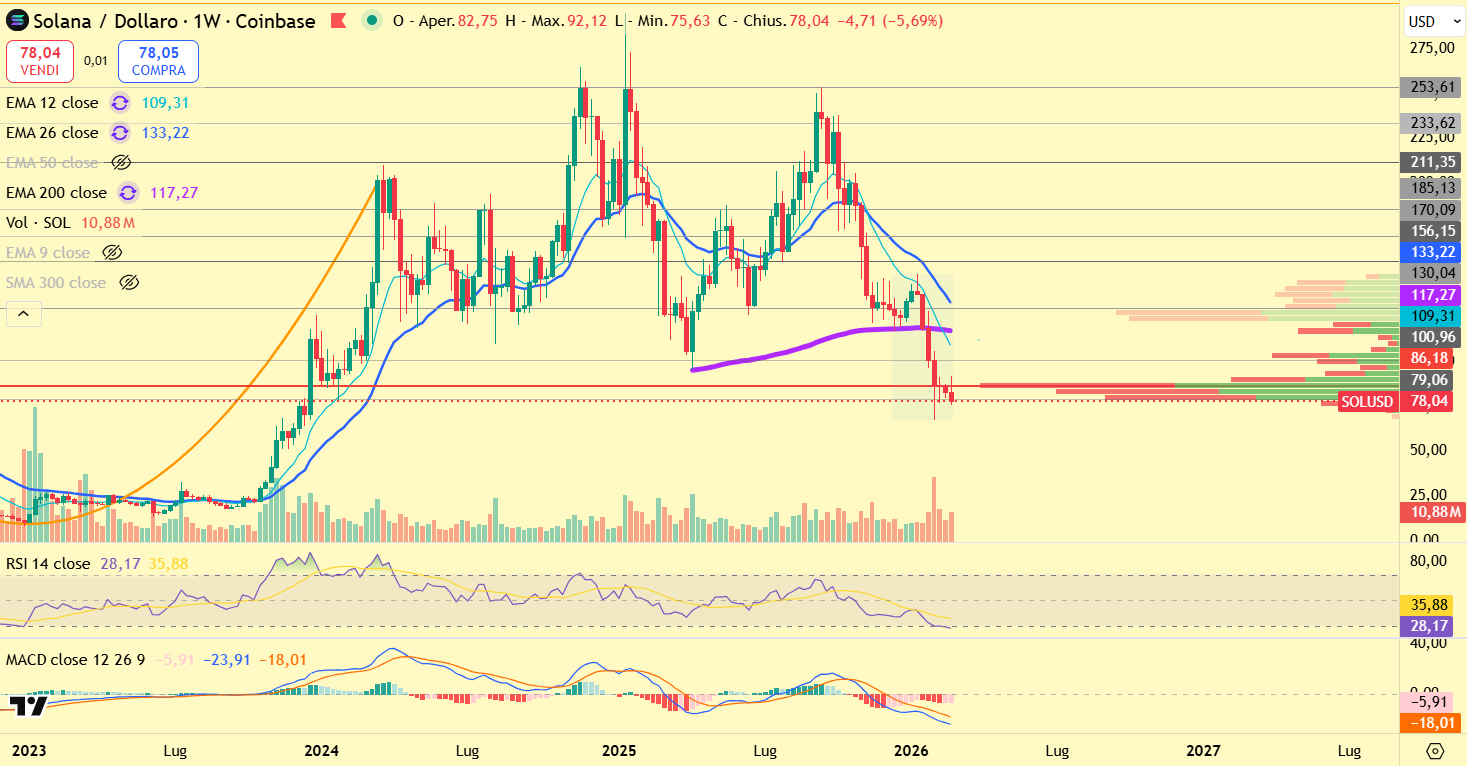
The price trajectory of Arbitrum in 2026 reflects a broader phenomenon seen across infrastructure tokens that surged during earlier scaling narratives. After losing more than 70 percent from its 2025 highs, ARB extended its decline into 2026, printing fresh all time lows and pushing the token deep into negative territory for long term holders.
From a behavioral standpoint, this matters. When the entire holder base is underwater, reflexive selling pressure increases. Rallies tend to be sold into quickly, as participants seek liquidity rather than exposure. This creates a self reinforcing loop where technical rebounds fail to develop momentum.
However, this type of price compression also historically coincides with late stage capitulation. In previous cycles, similar dynamics appeared when conviction had already been exhausted. The critical question for the Arbitrum price outlook is whether current conditions reflect the end of a distribution phase or the absence of any meaningful catalyst.
Stablecoins as a signal, not a headline
While ARB price action remains heavy, stablecoin data paints a more nuanced picture. According to DeFiLlama data, Arbitrum’s stablecoin market capitalization has shown incremental growth in recent weeks. USDC remains dominant, accounting for more than half of total stablecoin liquidity on the network.
Stablecoins do not chase momentum. They move with intent. Growth in stablecoin balances typically reflects preparation rather than speculation. Capital parks where it expects to deploy later, not where it expects immediate upside.
This is why stablecoin inflows matter for the Arbitrum price outlook, even when total value locked remains subdued. TVL measures committed risk. Stablecoins measure optionality. In environments where risk appetite is constrained, optionality often precedes deployment.
From a market structure perspective, this creates an asymmetry. Price reflects stress, while liquidity positioning reflects patience.
More research on Ethereum Layer 2 ecosystems is available on Block2Learn: https://block2learn.com/category/blockchain/
Why TVL weakness does not invalidate the thesis
Critics often point to declining TVL as evidence that Arbitrum’s relevance is fading. While TVL is an important metric, it is not always the most forward looking one. In periods of macro tightening, capital prioritizes flexibility over yield optimization.
Lower TVL simply indicates that users are unwilling to lock assets long term. It does not imply abandonment of the network. In fact, several high quality protocols have historically experienced TVL compression before structural growth phases resumed.
For the Arbitrum price outlook, this distinction is crucial. Liquidity that remains liquid can be deployed faster when conditions improve. Locked liquidity cannot.
The strategic pivot toward real world assets
One of the most significant developments influencing Arbitrum’s long term trajectory is its growing focus on real world assets. Rather than competing exclusively in saturated DeFi verticals, Arbitrum is positioning itself as infrastructure for tokenized yield and institutional grade products.
A notable example is the collaboration with ETHZilla, which is launching Eurus Aero Token I on Arbitrum. This product provides tokenized exposure to income generated by jet engines leased to a United States airline.
This is not a speculative NFT or a memetic yield strategy. It represents a shift toward cash flow backed assets that align with institutional mandates.
The timing of this initiative is not accidental. According to RWAxyz data, the real world asset sector has reached approximately 24.7 billion dollars in total on chain value. Tokenized gold products such as XAUT have surpassed 6 billion dollars in market capitalization, confirming sustained demand for yield bearing and asset backed tokens.
According to RWAxyz: https://www.rwa.xyz
For the Arbitrum price outlook, this matters because RWAs change the type of capital attracted to the network. Institutional capital behaves differently than retail capital. It is slower, larger, and more persistent.
RWAs as a conviction rebuilding mechanism
When an asset experiences prolonged drawdowns, restoring conviction becomes more important than restoring price. Arbitrum’s engagement with RWAs addresses this directly.
RWAs provide three structural advantages:
They generate predictable cash flows rather than reflexive incentives
They attract participants with longer investment horizons
They anchor on chain activity to off chain economic value
For a network where all holders are underwater, these advantages are critical. They reduce reliance on speculative rotations and shift focus toward sustainability.
The Arbitrum price outlook improves not because RWAs create immediate demand for ARB, but because they redefine why the network exists. Infrastructure narratives survive bear markets when they remain useful.
Institutional positioning and capital behavior
Institutional investors do not allocate based on recent price performance alone. They allocate based on infrastructure readiness, regulatory clarity, and asset quality. Arbitrum’s emphasis on stablecoins and RWAs aligns with these criteria.
Stablecoins provide settlement efficiency. RWAs provide compliant yield. Together, they form the backbone of institutional on chain finance.
This is why price weakness and strategic development can coexist. Price reflects the past. Infrastructure reflects the future.
Data from CoinMarketCap confirms that Layer 2 networks supporting stablecoins and RWAs are seeing relatively stable usage metrics despite broader market drawdowns: https://coinmarketcap.com
Risk factors that still matter
A realistic Arbitrum price outlook must also acknowledge risks. ARB remains vulnerable to further downside if macro liquidity deteriorates. Competition among Ethereum Layer 2s is intense, and differentiation is not guaranteed.
Additionally, RWAs introduce regulatory dependencies. Tokenized assets require legal clarity, custodial reliability, and jurisdictional compliance. Any disruption in these areas could slow adoption.
However, these risks are structural rather than reflexive. They unfold over time, not in liquidation cascades.
What the divergence is really signaling
The divergence between weak ARB price action and improving liquidity signals suggests that the market is in a transition phase. Speculative capital has exited. Strategic capital is positioning quietly.
This is often the most uncomfortable phase for investors. There is no momentum to follow and no narrative to trade. Only structure remains.
For long term participants, this phase defines the next cycle leaders. For short term traders, it offers little.
The Arbitrum price outlook therefore hinges less on immediate catalysts and more on whether its strategic pivot succeeds in embedding the network into the next wave of institutional adoption.
If RWAs and stablecoin growth continue, price will eventually follow utility. If they stall, ARB risks remaining trapped in a low conviction equilibrium.
At this stage, the data suggests that Arbitrum is not being abandoned. It is being repriced.