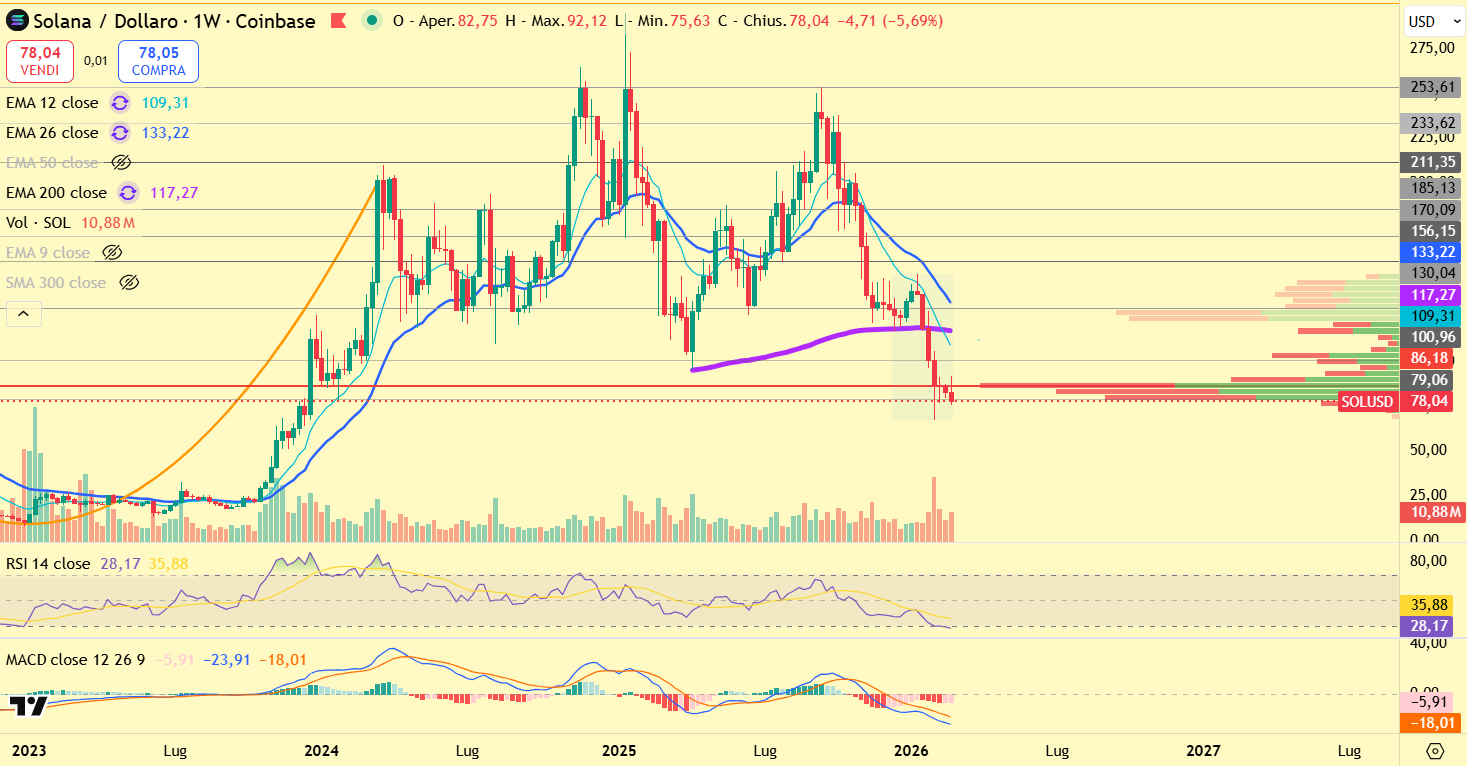
Bitcoin four year cycle remains one of the most misunderstood but resilient frameworks for interpreting crypto market behavior. Despite evolving macroeconomic narratives, ETF flows, and shifting investor profiles, price action continues to respect the same structural rhythm that has defined Bitcoin since its early market history.
Recent price strength toward the 70000 area has reignited optimism across the market. Smaller altcoins have responded aggressively, with sharp rebounds fueled by short term liquidity rotation and sentiment relief following softer inflation data. However, beneath this surface momentum, the broader structure still points to a market that has not completed its corrective phase.
Understanding where Bitcoin stands today requires separating short term reflexive rallies from cycle level positioning. The two are not mutually exclusive, but confusing them often leads to costly misinterpretation.
The four year cycle as a structural framework
The Bitcoin four year cycle is not a mystical rule tied exclusively to halving mechanics. It is a market structure pattern that reflects how capital enters, expands, distributes, and exits a highly reflexive asset class.
Each cycle has shown the same broad phases:
Expansion driven by narrative and liquidity
Acceleration fueled by leverage and retail participation
Distribution marked by volatility and divergence
Contraction characterized by declining liquidity and forced repricing
What matters is not whether this cycle aligns perfectly with macroeconomic calendars or political events. What matters is that price continues to behave consistently within this framework.
At present, Bitcoin price action remains well within historical parameters associated with the contraction and reaccumulation phase of the cycle.
Why recent strength does not invalidate downside risk
Bitcoin’s move toward 70000 has been interpreted by many as confirmation of renewed bullish momentum. However, historical cycle analysis suggests that countertrend rallies are a feature, not a bug, of corrective phases.
During previous cycles, Bitcoin frequently produced strong upside moves well before the ultimate cycle low was established. These rallies often coincided with temporary improvements in macro sentiment or liquidity conditions.
The current move fits this pattern.
Cooling inflation data has reduced immediate pressure on risk assets, allowing capital to rotate back into crypto temporarily. This does not change the fact that broader liquidity conditions remain restrictive and real yields remain elevated.
From a Bitcoin four year cycle perspective, such rallies are consistent with distributionary behavior rather than the start of a new expansion leg.
Altcoin outperformance as a late cycle signal
One of the most telling features of the current market is the aggressive outperformance of small speculative altcoins following Bitcoin’s rebound.
Tokens that had spent months in compression have exploded higher on rising volume. While this is often interpreted as a sign of renewed risk appetite, history suggests a more cautious interpretation.
Late stage corrective phases frequently see short lived altcoin surges as traders seek higher beta exposure once Bitcoin stabilizes. These moves are driven by:
Thin liquidity
High reflexivity
Narrative driven speculation
They are rarely sustainable without a broader expansion in system wide liquidity.
From a cycle standpoint, this behavior often appears before another leg lower, not after a definitive bottom.
Liquidity conditions remain the constraint
The most important variable in the Bitcoin four year cycle is not CPI data, ETF headlines, or individual altcoin narratives. It is liquidity.
Despite recent relief, global liquidity remains constrained. Balance sheet expansion is limited. Risk free yields continue to compete aggressively with speculative assets.
This environment supports volatility and rotation, not sustained trend expansion.
Until liquidity conditions materially improve, rallies should be viewed as tactical rather than structural.
More macro and liquidity analysis is available on Block2Learn:
https://block2learn.com/category/macroeconomics/
Bitcoin price remains inside historical drawdown ranges
One of the strongest arguments for cycle validity is that Bitcoin’s drawdown magnitude remains consistent with prior cycles.
Measured from cycle peak to recent lows, Bitcoin has retraced within the same statistical bands observed in previous four year cycles. This is critical.
Markets rarely respect exact levels, but they often respect ranges and distributions. Bitcoin has not deviated meaningfully from its historical behavior.
This reinforces the view that the current price action does not represent a structural anomaly. It represents continuation of a known pattern.
Why continuation lower remains plausible
Accepting the validity of the Bitcoin four year cycle does not require predicting an immediate crash. It requires acknowledging that the market may not have completed its repricing process.
Several factors support this view:
Real yields remain positive and competitive
Long term holders are still absorbing supply
ETF flows have stabilized but not accelerated
Speculative activity has returned prematurely
These conditions are typical of mid correction phases rather than terminal bottoms.
From a probabilistic standpoint, the path of least resistance remains skewed toward further downside or extended consolidation.
The role of sentiment in mispricing risk
Sentiment has improved rapidly following recent price gains. Fear has given way to optimism. This shift itself is informative.
Durable bottoms tend to form in environments of apathy and exhaustion, not renewed enthusiasm. When optimism returns too quickly, it often reflects incomplete repricing.
This does not invalidate tactical long opportunities. It does suggest that risk remains asymmetric to the downside at the cycle level.
Separating tactical trades from cycle positioning
A common mistake is conflating short term trades with long term positioning.
It is entirely possible for Bitcoin to rally toward 70000 while still being in a broader corrective cycle. These scenarios are not contradictory.
For cycle oriented investors, the Bitcoin four year cycle suggests patience rather than urgency. Preserving capital and optionality matters more than chasing momentum.
For traders, volatility creates opportunity. For investors, volatility is a signal.
What would invalidate the bearish cycle view
Cycle analysis is not dogma. It is a framework that must adapt to data.
The bearish continuation thesis would weaken materially if:
Liquidity expands meaningfully and sustainably
Real yields fall below risk asset returns
Bitcoin establishes acceptance above prior distribution zones
ETF inflows shift from episodic to persistent
Until these conditions are met, rallies should be treated with caution.
Why the cycle still matters in a changing market
Many argue that ETFs, institutions, and macro integration have changed Bitcoin permanently. While these factors influence behavior, they have not eliminated reflexivity.
Markets evolve, but human behavior and capital dynamics remain cyclical.
The persistence of the Bitcoin four year cycle is not a failure of innovation. It is a reflection of how capital moves through speculative systems.
Until proven otherwise, this framework remains one of the most reliable tools for separating noise from structure.
More Bitcoin focused research is available on Block2Learn:
https://block2learn.com/category/bitcoin/
Final perspective
Bitcoin remains within its historical cycle structure. Recent strength has improved sentiment and fueled speculative rallies, but it has not resolved the underlying liquidity and positioning dynamics.
From a cycle perspective, the market may still need to explore lower levels or extended consolidation before a durable expansion can begin.
The four year cycle does not predict timing. It defines context.
And in the current context, downside risk has not been exhausted.