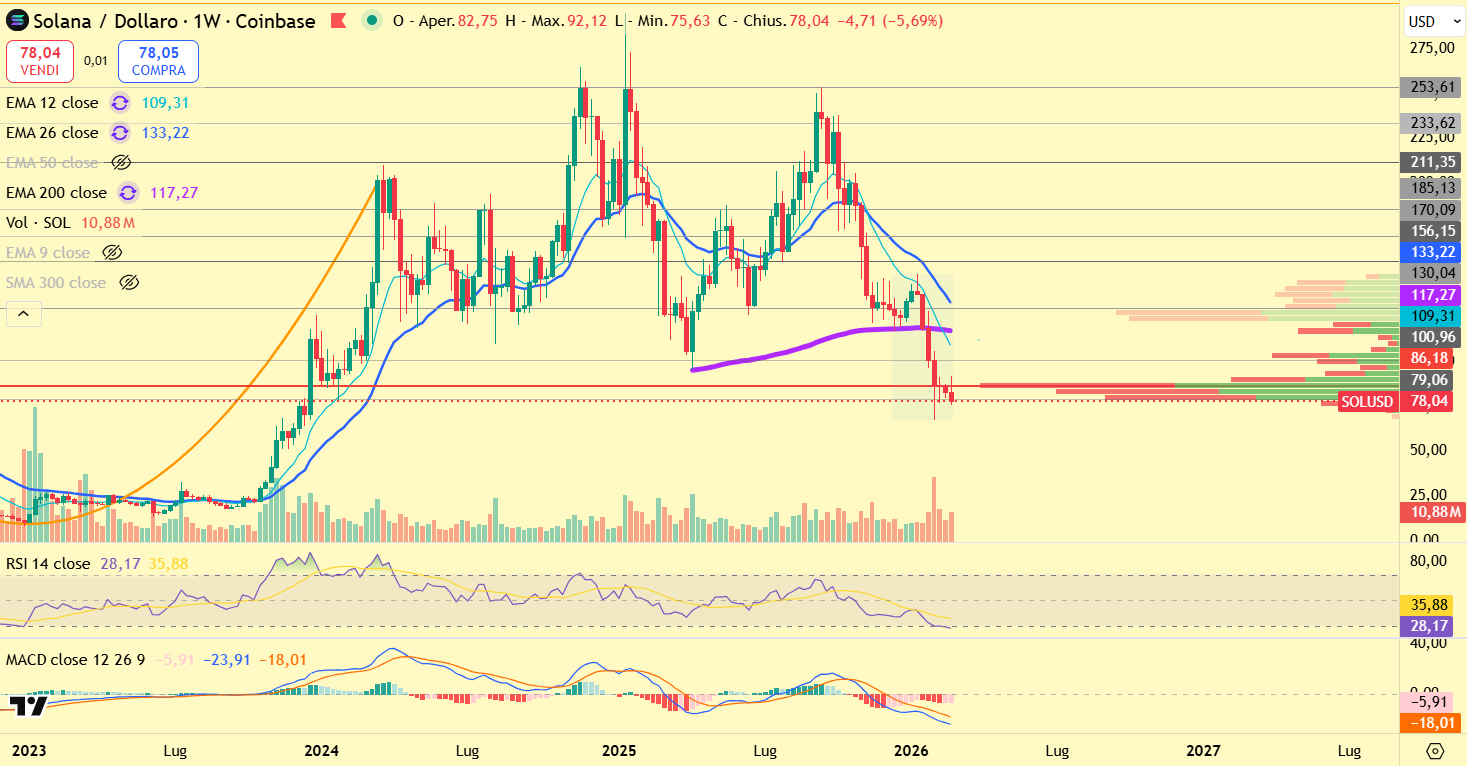
Capital war outlook has become a central theme in macroeconomic analysis as financial stress, geopolitical rivalry, and technological acceleration converge. The concept describes a shift from open global capital flows toward a more fragmented system where money, credit, and reserves are increasingly weaponized. This transition has profound implications for markets, particularly at a time when artificial intelligence investment depends heavily on abundant and cheap financing.
Recent warnings from Ray Dalio highlight that this phase is not a temporary disruption but part of a deeper structural transition in the global financial order. Understanding the capital war outlook is therefore essential for investors attempting to navigate the next decade of market behavior.
Capital war outlook within the late stage of the global cycle
Capital war outlook fits into a broader late cycle environment marked by high debt levels, declining trust between major powers, and rising political fragmentation. In this stage, economic tools increasingly replace traditional diplomacy as instruments of pressure.
Cross border capital movement was once treated as a neutral efficiency mechanism. Today it is viewed as a strategic vulnerability. Sanctions, asset freezes, regulatory barriers, and selective access to funding channels are reshaping how money moves globally. This shift alters risk premia across asset classes and regions.
From a market perspective, capital war outlook implies that financial stability can no longer be assumed as a baseline condition. Instead, capital availability becomes conditional, political, and unevenly distributed.
For broader macro context on global financial cycles, see Block2Learn Global Finance
https://block2learn.com/category/global-finance/
Why artificial intelligence is uniquely exposed
The capital war outlook arrives at a moment when artificial intelligence development is exceptionally capital intensive. Building data centers, securing advanced semiconductors, expanding energy capacity, and training large scale models require enormous upfront investment.
Estimates suggest that trillions of dollars will be required over the coming years to sustain AI infrastructure growth. Crucially, this investment model relies heavily on debt markets, syndicated loans, private credit, and bond issuance. Unlike traditional manufacturing, returns are long dated and uncertain.
In a fragmented capital environment, access to financing becomes uneven. Countries and companies aligned with strategic priorities may enjoy preferential funding while others face higher costs or outright restrictions. Capital war outlook therefore introduces a structural constraint on AI expansion rather than a cyclical slowdown.
Debt dependence and the vulnerability of funding channels
Debt has been the lubricant enabling rapid technological expansion over the past decade. Low interest rates allowed ambitious projects to be financed ahead of proven cash flow. This model breaks down when capital becomes scarce or politically constrained.
Under the capital war outlook, lenders reassess not only credit risk but geopolitical alignment. Funding decisions increasingly incorporate national security considerations. This changes the cost of capital in ways that traditional valuation models struggle to capture.
For companies operating at the intersection of technology and geopolitics, balance sheet resilience becomes as important as innovation capacity. Those unable to self fund growth may face abrupt repricing if debt markets tighten.
Foreign demand and pressure on sovereign debt
Capital war outlook also intersects with sovereign debt markets, particularly in economies that rely on external funding. For decades, major reserve currency issuers benefited from steady foreign demand for government bonds. This demand suppressed yields and enabled fiscal expansion.
As geopolitical tensions rise, some foreign holders reduce exposure to assets that could be frozen or sanctioned. This gradual shift does not require a sudden crisis to matter. Even incremental reductions can alter market equilibrium.
If foreign participation declines, governments face difficult trade offs between higher interest rates, currency depreciation, or central bank intervention. Each option carries implications for inflation, growth, and asset pricing.
For authoritative sovereign debt data, see Bank for International Settlements
https://www.bis.org
Historical patterns and market memory
Capital war outlook is not unprecedented. History shows repeated episodes where credit stress preceded broader market dislocations. In previous cycles, funding shortages in one sector quickly propagated across the system.
Periods such as the early 2000s technology collapse and the global financial crisis illustrate how debt market disruptions often serve as the transmission mechanism for equity repricing. Once confidence in funding evaporates, valuation narratives lose relevance.
Longer historical parallels reveal that capital controls and financial fragmentation tend to emerge before more overt geopolitical confrontation. Markets react first through volatility, then through repricing of risk assets.
Capital war outlook and the US China rivalry
At the core of the capital war outlook lies the strategic competition between major powers, particularly the United States and China. This rivalry spans trade, technology, finance, and security.
Financial interdependence once acted as a stabilizing force. Today it is increasingly viewed as leverage. Both sides seek to reduce exposure to each other’s financial systems while maintaining domestic stability.
This tension affects global capital allocation. Companies operating across jurisdictions must navigate regulatory uncertainty and funding constraints. Investors face growing difficulty in assessing jurisdictional risk using traditional metrics.
For macro geopolitical analysis related to markets, see Block2Learn Politics
https://block2learn.com/category/politics/
Implications for cryptocurrencies and alternative assets
Capital war outlook introduces a complex dynamic for cryptocurrencies. On one hand, digital assets operate outside traditional banking rails and are resistant to some forms of capital control. This characteristic may attract interest as trust in conventional systems erodes.
On the other hand, cryptocurrencies remain volatile and sensitive to liquidity conditions. During acute stress, investors often prioritize established stores of value rather than emerging alternatives.
Gold has historically benefited from periods of financial fragmentation. Its role as a neutral reserve asset becomes more attractive when trust in fiat systems declines. Cryptocurrencies may play a complementary role over longer horizons but are unlikely to replace gold as the primary hedge during early stages of systemic stress.
For data on gold and reserve trends, see World Gold Council
https://www.gold.org
Investment positioning in a capital constrained environment
Under the capital war outlook, investment strategy must adapt. Assets reliant on continuous refinancing face higher risk. Balance sheet strength and internal cash generation become key differentiators.
Diversification across asset classes and jurisdictions grows in importance. Exposure to real assets, defensive equities, and select commodities may provide resilience. Liquidity management becomes a strategic priority rather than a tactical consideration.
Periods of dislocation also create opportunity. When capital is scarce, valuation gaps widen. Investors with patience and liquidity can acquire high quality assets at discounted prices. However, timing and risk tolerance are critical.
How the capital war outlook reshapes long term expectations
Capital war outlook challenges assumptions that defined the post Cold War financial era. Free capital movement, abundant liquidity, and predictable policy coordination can no longer be taken for granted.
This does not imply perpetual crisis. It implies higher volatility and greater dispersion of outcomes. Markets will reward adaptability rather than leverage.
For investors, the key takeaway is to move beyond linear narratives. Growth sectors like AI remain transformative but must be evaluated through the lens of funding sustainability and geopolitical alignment.
More macro research, long form analysis, and market structure insights are available on Block2Learn
https://block2learn.com/