Institutional DeFi adoption is no longer a theoretical discussion. It is actively reshaping how capital interacts with blockchain infrastructure, even as crypto prices remain under pressure from exchange traded fund outflows and cautious investor sentiment.
While Bitcoin and Ether have staged modest rebounds in recent sessions, price action alone fails to capture the deeper shift unfolding beneath the surface. The real signal lies not in short term volatility, but in how the world’s largest financial institutions are quietly positioning themselves within decentralized financial rails.
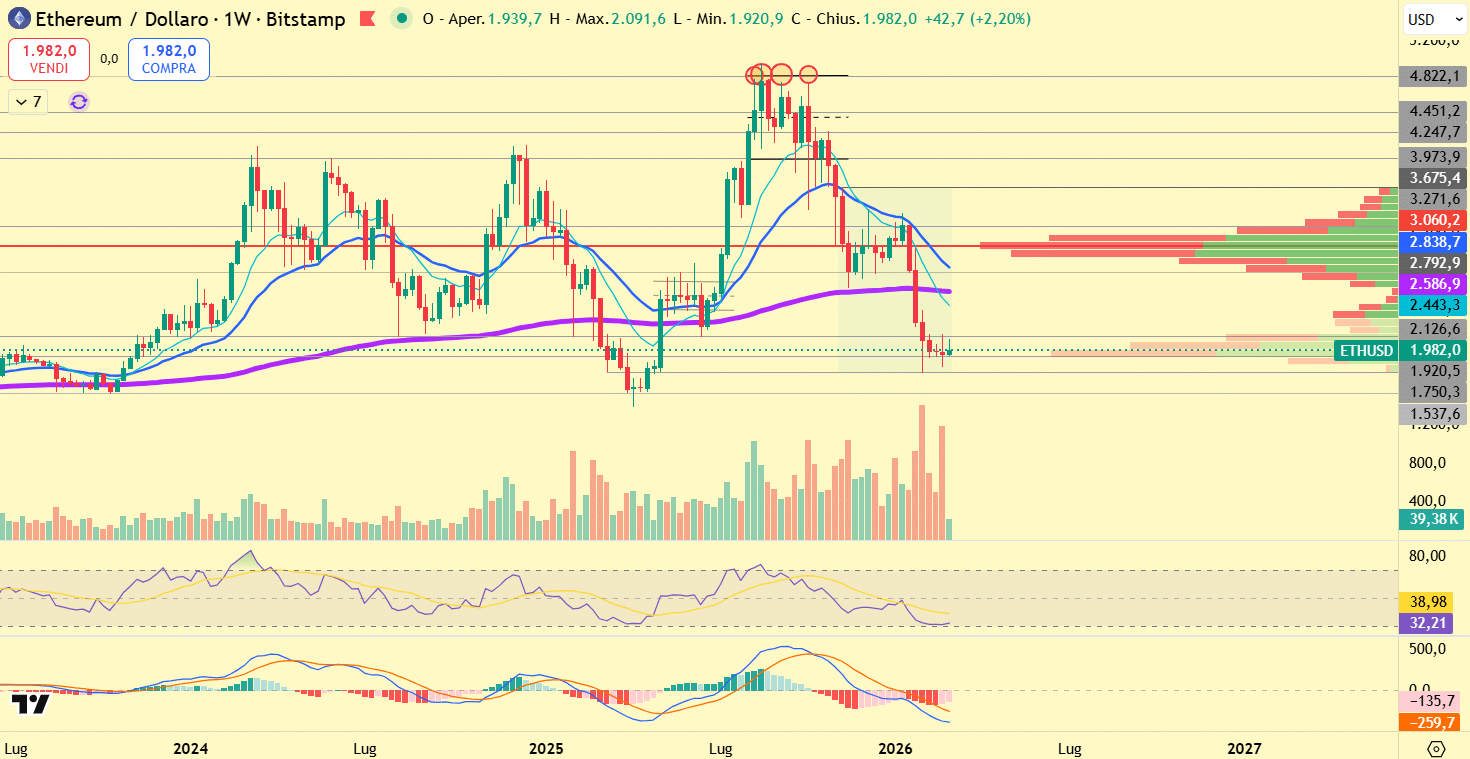
This divergence between weak price momentum and accelerating institutional engagement marks a defining phase for the crypto market.
ETF flows tell one story, infrastructure tells another
Recent ETF data reflects ongoing pressure. Spot Bitcoin and Ether products have experienced alternating inflows and outflows, with net figures tilting negative across several sessions. From a price perspective, this has capped upside momentum and reinforced a fragile trading environment.
However, ETF flows are only one expression of institutional behavior. They represent passive exposure rather than strategic infrastructure alignment.
Institutional DeFi adoption operates on a different axis. It focuses on settlement, liquidity, custody, and programmable financial instruments rather than directional price bets.
That distinction matters.
More market context on ETF dynamics is available on Block2Learn:
https://block2learn.com/category/etf/
Tokenized treasuries as a gateway to DeFi
One of the clearest signals of this shift is the growing role of tokenized real world assets. Tokenized Treasury products are increasingly serving as a bridge between traditional finance and decentralized liquidity venues.
Rather than viewing DeFi as a speculative frontier, institutions are approaching it as a distribution layer for familiar instruments.
This evolution reframes institutional DeFi adoption as an infrastructure decision rather than a risk on allocation.
According to RWA.xyz, tokenized Treasury products now represent a multi billion dollar segment of onchain assets, with growth accelerating even during broader market drawdowns.
https://www.rwa.xyz
Why Uniswap matters in this transition
The choice of decentralized exchanges as distribution venues is not incidental. Protocols like Uniswap offer deep liquidity, composability, and transparent execution that increasingly align with institutional requirements.
For institutions, DeFi is no longer defined by permissionless chaos, but by programmable settlement with verifiable rules.
This is a fundamental redefinition of institutional DeFi adoption.
Instead of building parallel private blockchains, institutions are leveraging existing public infrastructure while layering compliance and access controls at the application level.
The quiet role of custody and middleware
Another underappreciated component of this transition is custody. Institutional engagement with DeFi relies heavily on regulated custodians, middleware providers, and tokenization platforms.
These entities abstract away much of the operational complexity while preserving onchain settlement.
The result is a hybrid architecture where traditional governance structures coexist with decentralized execution.
This hybrid model explains why institutional DeFi adoption can accelerate even while retail participation remains subdued.
Binance and the signaling power of reserves
While asset managers focus on tokenization and liquidity, exchanges are sending their own signals.
The decision by major exchanges to consolidate reserve assets into Bitcoin reflects a broader narrative around balance sheet credibility and long term risk management.
Holding Bitcoin as a core reserve asset aligns exchanges with the dominant settlement layer of the crypto ecosystem rather than fragmented altcoin exposure.
This behavior reinforces Bitcoin’s role as collateral infrastructure even as institutional DeFi adoption expands elsewhere.
More analysis on crypto exchange balance sheets is available on Block2Learn:
https://block2learn.com/category/exchange/
DeFi beyond yield extraction
A critical distinction emerging in the current cycle is between genuine DeFi infrastructure and yield wrappers built on centralized risk.
Leading voices within the ecosystem have emphasized that decentralized finance derives its value from altering risk distribution, not merely enhancing yield on custodial assets.
This perspective is increasingly relevant as institutions explore DeFi.
Institutional DeFi adoption favors protocols that improve settlement efficiency, transparency, and capital mobility rather than those that simply repackage centralized exposure.
Macro constraints still matter
Despite structural progress, macroeconomic conditions remain a constraint on price appreciation.
High real yields, cautious liquidity conditions, and geopolitical uncertainty continue to suppress risk appetite across asset classes.
This explains the apparent contradiction between accelerating institutional DeFi adoption and subdued token prices.
Infrastructure investment often precedes price revaluation rather than following it.
More macro analysis is available on Block2Learn:
https://block2learn.com/category/macroeconomics/
DeFi as a long term strategic layer
From an institutional perspective, DeFi is increasingly viewed as a strategic layer rather than a tactical trade.
Tokenized treasuries, onchain FX settlement, decentralized liquidity venues, and programmable collateral are components of a future financial stack that reduces friction and enhances capital efficiency.
This framing places institutional DeFi adoption closer to fintech infrastructure development than speculative crypto cycles.
Legal clarity as an accelerant, not a prerequisite
Regulatory uncertainty remains a headline risk, but it has not halted institutional experimentation.
Instead, institutions are advancing cautiously, focusing on segments with clearer legal footing such as tokenized government debt and permissioned access models.
As regulatory clarity improves, these early experiments are positioned to scale rapidly.
This dynamic mirrors previous financial innovations where infrastructure matured quietly before regulatory frameworks caught up.
Market structure implications
The long term impact of institutional DeFi adoption on market structure is profound.
Liquidity may increasingly fragment across onchain venues rather than concentrating solely in centralized exchanges. Collateral may become more programmable and composable. Settlement cycles may compress from days to minutes.
These shifts alter volatility dynamics, capital efficiency, and the role of intermediaries.
They also challenge simplistic narratives that equate institutional involvement solely with ETF flows.
A market in transition, not contradiction
The current phase should not be interpreted as contradictory. Weak price action and strong infrastructure development can coexist.
Markets often undervalue structural change until its effects become unavoidable.
Institutional DeFi adoption is not a trade. It is a trajectory.
Closing perspective
Crypto markets are navigating a transitional phase where price signals lag structural evolution. ETF outflows and fragile sentiment dominate headlines, but beneath them, institutions are methodically integrating decentralized financial rails into their operational frameworks.
This quiet buildout may not immediately lift prices, but it reshapes the foundation upon which future cycles will unfold.
When liquidity conditions eventually shift, markets built on stronger infrastructure tend to respond faster and more decisively.
The story of this cycle may not be written in daily candles, but in the slow convergence of traditional finance and decentralized execution.



 .90 Support Zone" data-lazy-src="https://block2learn.com/wp-content/uploads/2026/03/img_0562.jpg"/>