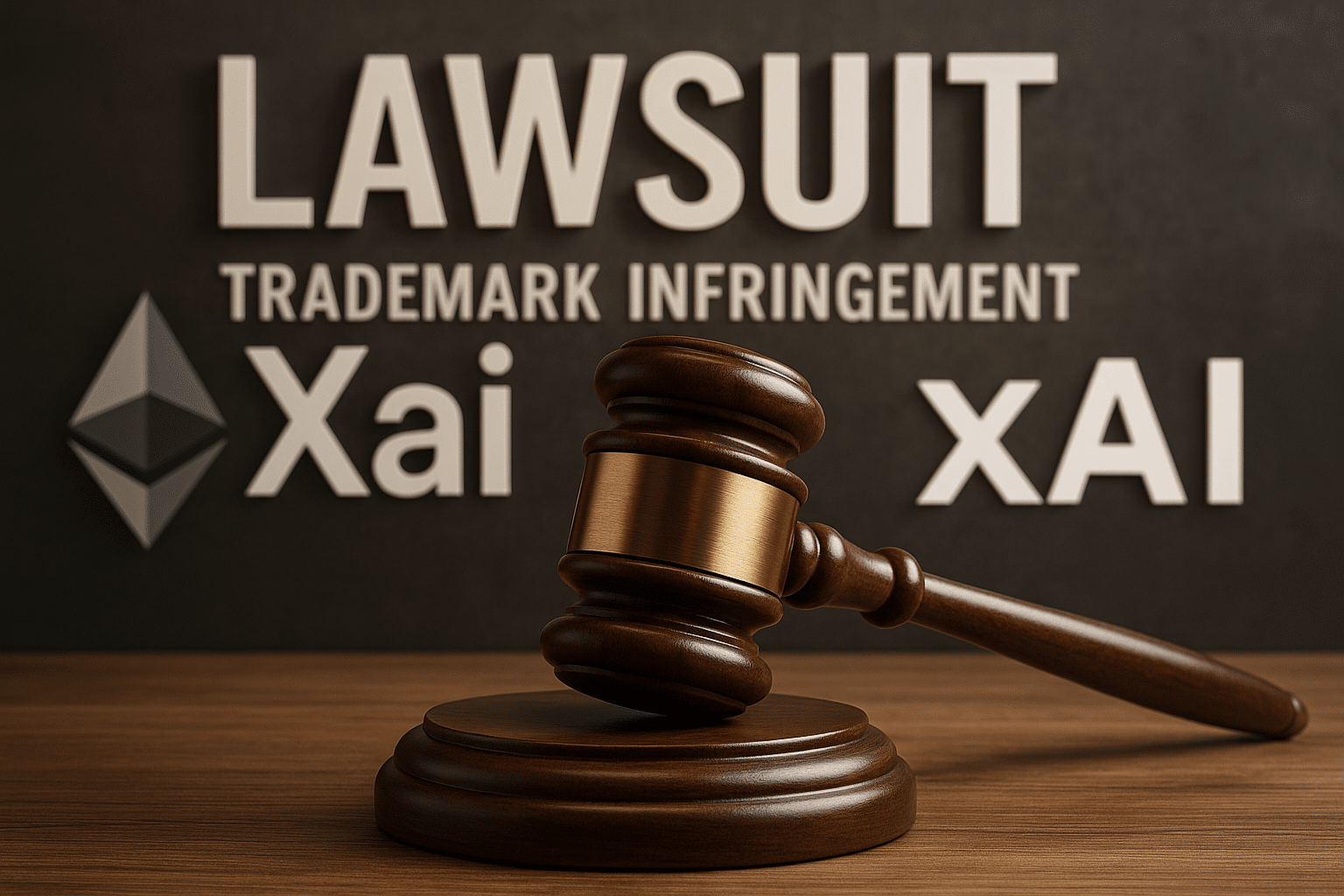
The legal battle between blockchain innovation and artificial intelligence has taken center stage as Ethereum gaming network Xai has officially filed a lawsuit against Elon Musk’s company, xAI, over trademark infringement. This case underscores not only the growing tension between Web3 and AI markets but also the importance of branding in a rapidly evolving digital economy.
The lawsuit, lodged in the Northern District of California, alleges that Musk’s artificial intelligence venture has created widespread confusion in the marketplace, resulting in reputational damage to Xai’s brand and its $XAI token. For companies operating at the intersection of blockchain and gaming, the dispute highlights how critical intellectual property rights have become.
Ethereum gaming network Xai and its trademark origins
Xai is operated by Ex Populus, a Delaware-based corporation that has been building its blockchain-powered gaming ecosystem since mid-2023. The project integrates Ethereum-based infrastructure to enable scalable video game logic, AI-driven decisions, player rewards, and seamless digital transactions. Its ecosystem is underpinned by the $XAI token, which facilitates activity across gaming applications.
According to the filing, Ex Populus has actively used the XAI trademark in U.S. commerce since June 2023. Its integration into blockchain gaming, along with its widespread use in digital environments, established brand recognition well before Musk’s AI company was announced.
For more insights on blockchain gaming projects, visit Block2Learn’s Gaming section: https://block2learn.com/category/gaming/
The rise of Musk’s xAI and the source of confusion
Elon Musk launched xAI in July 2023 with the mission of advancing artificial intelligence research. While the company’s initial focus was AI-driven tools, its announcement in November 2024 of plans to launch a gaming studio escalated concerns for Ex Populus.
The lawsuit claims that “marketplace confusion abounded” as both consumers and publications began associating Musk’s xAI with the Ethereum gaming network Xai. Even Musk’s AI chatbot, Grok, was cited as incorrectly linking the two projects.
This overlap in branding, particularly in the context of gaming and AI applications, is the cornerstone of the trademark infringement claim. The filing argues that Xai’s reputation has been compromised, with many users assuming a direct connection between Musk’s venture and the gaming network.
Reputational harm and consumer sentiment
Beyond simple brand confusion, Ex Populus asserts that its reputation has suffered due to Musk’s polarizing public profile and controversies surrounding xAI’s products. The company claims that negative consumer sentiment has spread across communities, with some users perceiving Xai as directly associated with Musk’s actions.
The lawsuit emphasizes the loss of control over its hard-earned goodwill in the XAI trademark. In the court’s view, reputational harm extends beyond lost market share, affecting long-term trust in the brand’s ability to operate independently.
For more research on blockchain ecosystems and their branding strategies, explore Block2Learn’s Blockchain category: https://block2learn.com/category/blockchain/
Musk’s legal team and trademark pressures
According to the complaint, Musk’s legal representatives attempted to pressure Ex Populus into surrendering its rights earlier this year. The filing alleges that Musk’s team threatened to push for the cancellation of Xai’s registration.
Interestingly, the U.S. Patent and Trademark Office (USPTO) has already suspended several of Musk’s pending trademark applications due to the likelihood of confusion with Xai’s pre-existing mark. This development strengthens Ex Populus’s legal standing, suggesting that regulators acknowledge the overlap between the two brands.
The company is seeking damages for infringement, cancellation of xAI’s pending trademark applications, and a court order preventing Musk’s company from using the disputed name in gaming and blockchain-related contexts.
For official records on trademark suspensions and corporate filings, see the USPTO: https://www.uspto.gov
Implications for the blockchain and AI industries
The Ethereum gaming network Xai lawsuit against Musk’s xAI is more than just a corporate dispute; it highlights the increasing overlap between Web3 and AI industries. As blockchain gaming evolves, the role of artificial intelligence in decision-making, design, and user interaction is becoming more prominent.
This convergence creates fertile ground for collaboration but also intensifies the risk of brand conflicts. For startups in the blockchain space, the case is a warning that securing intellectual property rights early is critical to avoid future disputes.
Furthermore, the lawsuit may shape the regulatory landscape for how blockchain-native companies protect their brands against tech giants entering similar markets.
Broader reflections on corporate branding in Web3
In the world of decentralized networks, where open-source principles dominate, branding may seem less important. Yet the Ethereum gaming network Xai lawsuit demonstrates that brand identity can make or break a project’s adoption curve. Trust, recognition, and legal protections form the backbone of user confidence.
For Web3 companies, the path forward includes proactive steps such as securing trademarks, filing patents, and building transparent communication strategies. With global interest in gaming and AI at record highs, ensuring that communities understand the distinction between projects is crucial.
A precedent-setting battle
The Ethereum gaming network Xai lawsuit against Musk’s xAI could set a precedent for future disputes at the intersection of blockchain and artificial intelligence. While the case will ultimately be decided in court, its implications extend far beyond the immediate parties.
If Ex Populus prevails, the ruling may empower smaller blockchain firms to stand their ground against larger competitors attempting to encroach on their brand identity. If Musk’s xAI manages to navigate the dispute successfully, it could signal that established corporations have an advantage in leveraging overlapping market spaces.
Either way, the outcome will shape the dialogue around trademarks, market confusion, and reputational control in a digital economy where branding is increasingly inseparable from innovation.
Start Free Today. Unlock Your 15% Member Discount.
Access the Free Start program immediately and receive an exclusive 15% discount for your first Learning Path purchase.
Build your foundation before making your next investment decision.